Reposting Original Book Review: “I’ll Fix America Tonight” by Nathan Andrew Roberts

OFFICIAL DESCRIPTION

If you are tired of Democrats and Republicans making empty promises and their followers dogmatically choosing sides on every debate and issue so their guys can remain in power, you’re a lot like the author of this book. Tackling tough issues like the immigration debate, slavery reparations, minimum wage, taxes, college tuition, the insurance industry, business, the role of government in ordering our lives, prisons, the relationship of society to police, and many more, he proposes revolutionary solutions instead of choosing to spend 70,000 words needlessly criticizing. Coming from the view that every human is an image-bearer of God and that all man-made structures and agendas are open for debate, he offers solutions to some of America’s most burdensome problems that can be considered and implemented to make both sides happy. Understanding that too many people nowadays take themselves far too seriously, he gives the reader many self-deprecating and humorous asides (something sorely lacking in political and social debate). Buy this book and join the fight against poverty . . . namely, his poverty.

REVIEW:

What an unexpectedly timely book!

It just so happens that Nathan Andrew Roberts’s I’ll Fix America Tonight (well, at least by the weekend) hit the top of my reading pile at the same time as the peak of America’s chaotic situation a few weeks ago. That means I’m posting this review in a bit of a changed world from the one that existed beforehand. I sense that feelings are still running extremely high among both Republicans and Democrats here in the USA and that not everyone is quite ready to open their minds to entertain the many exciting and interesting thought experiments that Roberts describes in his book. But I hope and even truly believe (by force of will, maybe) that just as many if not more people are eager to reconcile with their friends and family on the other side of the aisle. Perhaps a book such as this one has a real and useful function as we move forward into our brave new world.

Speaking of, I find our cultural associations with that Shakespeare reference (see below) quite useful indeed. It comes from The Tempest, my favorite of Shakespeare’s works, and is spoken by a young woman named Miranda, who has been sequestered on an island since infancy. When she meets outsiders for the first time, her reaction is:

In the eons since Shakespeare penned those lines, we have also seen the reference given quite the negative connotation, thanks in no small part to the British pessimist Aldous Huxley, who published Brave New World in 1932. Both Shakespeare’s play and Huxley’s dystopic novel are replete with social commentary, particularly on the nature of different worldviews.

For my part, I’ve always been drawn to Miranda’s approach. She falls in love with everything she meets and is willing to suspend judgment, where others leap to the worst conclusions about one another around her.

Nathan Andrew Roberts’s recent book is more or less designed for us Mirandas. He asks us to suspend our judgment of one another, work toward common goals, and make daring attempts to heal the breaches between our American political parties.

In his introduction, Roberts writes:

Government (including education and municipalities), business, places of worship, and other societal groupings are the pillars of society. Family is the foundation. When the foundation crumbles, so do the pillars. What I propose is drastic changes to all of these. Mind you, many of my ideas come from a morally conservative Christian viewpoint (if you can’t even bear to listen to my words past this sentence, I would be happy to provide you a refund), but I take a centrist and liberal stance on many different political and societal issues.

I’ll Fix America Tonight by Nathan Andrew Roberts (2020), p. iii

Having framed his own personal stance in this way, Roberts says: “Now, there are some ideas pertaining to a lot of facets of our society contained herein.” So far, so good. But Roberts also has a request of his readers! “What I would ask of even the most unreasonable of readers is that if you detest one idea or belief of mine that you refrain from waving off all others.” He describes the book as a buffet, full of various thought experiments from which a reader can pick and choose what appeals and leave the rest.

And, wow, does he cover quite a few topics! It’s worth noting here that my family too is fractured between two (or three, or four, or more) radically different worldviews and certainly represents both sides of the current political system. Running down Roberts’s table of contents is a lot like looking at a list of conversation topics we try not to bring up over the dinner table: the military, reparations, welfare, and education, among them. We are not so invested in some of the other topics he covers, like foreign aid––but as this is a buffet, I didn’t feel as though I had to have a clear opinion on what the “fix” should be by the end of that chapter; I was merely curious what radical changes Roberts might suggest, and what funny anecdotes he might share. For some of the chapters that have been topics of serious disagreement among my family and friends, I found myself paying more attention to the suggested “fix” than the humorous bits. Knowing that I had Roberts’s, how shall I put this, permission to move back and forth meant that I didn’t set the book down when I disagreed with a point (or ten). I simply made a note (and probably said huh! out loud) and moved on, knowing that I’m not being asked to carry the burden of forming a set opinion just to entertain a possible future by way of a thought experiment.

As my father would say, Roberts is something of a “goofball.” He loves a good pun, cracks himself up with his own “dad jokes” and stories, and generally keeps the entire book lighthearted. (“That question isn’t rhetorical,” he writes at one point. “I want you to compose your answer in a well-worded essay and mail it to me. Route it through my temporary office at the North Pole.”) That said, he always clearly signals when he wants his readers to take him seriously. I really appreciated that. He’s seen and been through enough to more than fill out a straight memoir, but he chose to take on this project because he wants to help this country heal. I love that about this book: its intentions are so pure.

It certainly doesn’t hurt that Roberts also writes well! His language is accessible, and the book has been edited well. It doesn’t dither around but rather is nicely streamlined. I can’t remember the last time I picked up a book (any book!) dealing with politics under 400 pages––and Nathan Andrew Roberts gets all his work done in fewer than 300. My wrist (and attention span) is eternally grateful. And he ends the book on such a positive note: “I believe in us. Ready?” Yes, wolf pack supervisor, I am ready. Let’s build some bridges.

IN SUMMARY:

In a world riven with civil unrest (and sometimes, uncivil unrest), there is absolutely a need for more books like Nathan Andrew Roberts’s I’ll Fix America Tonight (well, at least by the weekend). His goal of providing fresh ideas to address social and political inequities that all parties can agree on is fabulous. I enjoyed the thought experiments he describes in this book, and I have the feeling this will be a book that lands well among people already willing to reconcile and make compromises to improve public discourse.

WHERE TO BUY?

You can find out more on the Outskirts Press Author Page.

I received a copy of this book in exchange for an honest review. 

* Courtesy of Outskirts Press book listing.


SONY DSC

ABOUT KENDRA M.: With nine years in library service, six years of working within the self-publishing world, as well as extensive experience in creative writing, freelance online content creation, and podcast editing, Kendra seeks to amplify the voices of those who need and deserve most to be heard.
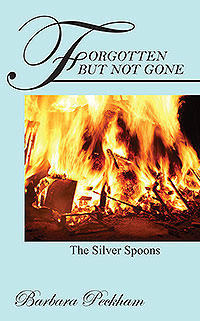
 

ORIGINAL BOOK REVIEW: “Forgotten But Not Gone” by Barbara Peckham

OFFICIAL DESCRIPTION*:

Forgotten But Not Gone is an interwoven story about a married housewife and part-time librarian living in coastal Massachusetts in 1965. She is happy and very active in her life there. However, she has a background that no one knows about except her husband, George, and even he doesn’t know anywhere near the whole story. He knows that she has amnesia about her early childhood, but very little else.

All Liz really remembers is that, at the age of about fourteen or fifteen, she found herself running, panicked, down an Appalachian mountainside. She had no idea then, nor did she now have any memory of what had happened before that, what she was running from, or what had frightened her so much. Now she seldom thought about it. She had managed to get on with her life and what was past was past.

That is, until, one day a strange letter arrives in her mailbox. It appears that someone know things about her that she doesn’t even know, and it frightens her. Not long after, other occurrences begin, and they escalate more and more in intensity and danger. She is sure all this has to do with the past she can’t remember, and she begins to fear for her life. She has had, ever since she can remember, some silver teaspoons with initials engraved on them, and a diamond ring, but she has no idea whose they were or what the initials mean. Did she steal them? Is someone finally going to find her? Then a teaspoon exactly like hers turns up in the collection of a friend. Where did she get it? How are they connected?

Still, try as she might, all she can remember is that she ran until she came across a hardscrabble farm, where an elderly couple took her in. They treated her like the daughter they had lost. She stayed and worked the farm with them until, after a few years, they died, one shortly after the other, and she was forced to leave the only home she remembered to go out on her own with few resources and little education. The years following were years of hard work and night school.

The story weaves back and forth between the present, [with] Liz revealing more of her past, a mysterious man who has come to town with a vengeance, and a young woman who has in her possession another of the silver spoons. All comes together at the end with a terrible fire, and the truth comes out.

REVIEW:

Once upon a time, a girl stumbled out of the thickly forested Appalachian foothills and into the lives of an elderly couple on a small farm. Uncertain of what had happened before she entered the forest, her exact age, and even her own name, the girl is dubbed “Nell” and nurtured by the Ekburgs until their deaths send her out into the world, ready to make a new life for herself under a new name, and equally determined to make new memories to replace the ones she’d lost.

Thus begins the story of Forgotten But Not Gone: The Silver Spoons, a new cross-genre historical fiction plus mystery novel from Barbara Peckham. The novel leaps twenty-odd years into the future, and catches up with Nell, now Mrs. Elizabeth (“Liz”) Everson, living a calm life as a part-time librarian and housewife just prior to Halloween in 1965. And yes, a set of silver spoons really does connect the dots between the stories of Nell/Liz/? and those of the book’s other point-of-view characters, including her husband George, the young Joyce, Liz’s new friend Elaine, the local police chief, and an unnamed mystery man who thinks he knows exactly what happened during Liz’s forgotten years––and is determined to punish her for it.

Told in a combination of straightforward narrative and flashbacks from their prior lives, Forgotten But Not Gone: The Silver Spoons perfectly melds those elements it borrows from historical fiction and cozy mystery genres. Peckham has an eye for detail, walking her readers back through the years to a time when phones were analog and had those spiral cords (you still can find them for sale as ‘antiques’ on Etsy, which makes me feel absolutely ancient), and when people sent letters that were made of actual paper. She also embraces all of the pomp and circumstance (and obsessive planning) behind many a community celebration of the variety still common in older, tourist-friendly East Coast shore towns. As a librarian, Liz enlists Elaine and her other Book Club friends to assist in organizing Seaside’s Christmas parade and neighborhood gathering––a subplot that is blessedly free of the sinister elements that are becoming routine in the Everson household all of a sudden. It is here, with her friends around her and a project to complete, that Liz’s fundamental personality really shines––and her natural aptitude for winning people over. It’s only when Liz returns home that she is haunted by danger, and the nagging feeling that someone is out to get her for things she can’t even remember begins to sink its claws into her mind.

So, what happened in those years she’s forgotten? I can’t tell you exactly, since to do so would be an unforgivable spoiler, but Peckham weaves together the various elements of the novel into one, cohesive, and compelling story of fractured and found families, suspense and seeking sanctuary, and the making of a whole and complete life.

At a time when the world seems to be either on fire or consumed by some other tragic breaking news, Peckham invokes an era when the local police were also neighbors and friends, when daily life felt comfortable like a favorite sweater, and when libraries were the surest place to discover critical information in a mystery so old the trail is beyond cold––it’s pure ice. And I find this somewhat ironic, given that fire and ice (or at least, icing bruises) are common themes in Forgotten But Not Gone: The Silver Spoons. I heartily encourage you to take a peek at this novel if you liked Big Little Lies but wished that people would just talk to each other and figure out a solution together, or if you find yourself hankering for a seasonally appropriate read in the months between Halloween and Christmas. After all, we all need a satisfying spook every now and then.

IN SUMMARY:

Compassionately written characters learn crucial details about their own lives in this cozy, genre-bending novel from Barbara Peckman. Forgotten But Not Gone: The Silver Spoons is exactly the right book at the right time for those of us who love old houses and old towns and old memories relived.

WHERE TO BUY?

You can find Forgotten But Not Gone: The Silver Spoons wherever good books are sold, including Amazon and WalMart. You can also find out more about Joseph Bylinski’s work on the book’s Outskirts Press author page.

WHAT NEXT?

I’m digging into Rambling With Milton next, a novel that follows a journalist and columnist whose youthful ideals about romance remain unfulfilled after a long and successful career. A significant chunk of this romantic work of fiction is set around a Christmas play and the long road to recovery one woman faces as she falls in love. The premise is exactly the sort of thing to have me restocking my kleenex supplies, so I will update you with more information in the days to come!

I received a copy of this book in exchange for an honest review. 

* Courtesy of Amazon book listing.


SONY DSC

ABOUT KENDRA M.: With nine years in library service, six years of working within the self-publishing world, as well as extensive experience in creative writing, freelance online content creation, and podcast editing, Kendra seeks to amplify the voices of those who need and deserve most to be heard.

ORIGINAL BOOK REVIEW: “A Sense of Urgency” by Patrick McLean (Fiction)

A SENSE OF URGENCY by Patrick McLean

OFFICIAL DESCRIPTION*:

Baseball franchise moves can break your heart.

Mark Weber, President & CEO of the St. Louis Cardinals, thought he landed his dream job. Little did he know it would turn into a nightmare shortly after management changes at parent company Rheinhold Brewing Company.

Christina Rheinhold, newly installed President & CEO of the company that bears her name, is anxious to keep the small brewery afloat. What better way than to shed non-beer assets? Especially if you don’t even care about the team, purchased by her father when In-Bev acquired Anheuser-Busch and they also were in an off-loading situation. Christina [is] well aware of the 125 year plus tradition of the team in St. Louis, but it [is] very tempting to sell the team to out of town parties for top dollar.

Can Mark, with the help of natural and even supernatural support, save the team for the city and their fans?

REVIEW:

Baseball! So many different aspects of my life seem to be telling me I should brush up on my (nearly nonexistent) knowledge of the sport. I spent my middle and high school years abroad in a country where baseball doesn’t exist, which probably explains why I know so little about the sport–including its history and why it is of such significant importance to Americans today. There are some similarities across sports: baseball and cricket, for example, are both considered “gentlemens’ sports” in that competition coexists with camaraderie and umpires are as important as the players, their calls are of the utmost importance, and sassing an umpire is as gross a misdemeanor as exists. In many other ways, though, baseball and the culture that has formed around it is utterly unique. In A Sense of Urgency, Patrick McLean captures much of the detail and texture of daily life with baseball and infuses his book with the spirit of the same.

Like the sport itself, A Sense of Urgency is a dialogue-driven read. Thumb your way through the book and you’re liable to land on a series of pages where the majority of the text printed on that page is being spoken aloud by one character or another. McLean is somewhat unusual in this–in writing, I mean. My personal addiction when writing is to scenic description (sometimes I think it’s all I know how to write) and that was fairly common among the writers I became acquainted with back in my college years. There are also plenty of authors who are addicted to what you might call the Infodump, or in some genres worldbuilding without much action. In moderation both worldbuilding and scenic description can be useful, but as most of you can probably attest, something needs to happen in a book in order to keep the momentum going and readers engaged. Too much summary description of action as it unfolds, though, can come off as distant. (“He ran, then he stopped. He ate a sandwich. Then he moved to Alaska to learn how to muster sled dogs.”) It’s almost as if some writers (me included) can completely forget about the power of dialogue–but not Patrick McLean.

One of the benefits of a dialogue-driven book is that it doesn’t come off as teasing or deliberately disingenuous to withhold certain information until the critical moments in which those details are important; a third person omnipresent narrator, however, knows everything the character knows and can therefore be something of a tease in books that depend on the timing of those details for plot momentum and reader interest. (If an author knows that it was Lady Scarlett in the dining room with the candlestick but asks me to consider the butler and Colonel Mustard as primary suspects, I start to wonder what else the narrator is hiding from me. And then I start skimming ahead. Because sometimes I’m a very impatient reader! Whoops.) With dialogue, though, an author is fully justified in only conveying what the characters themselves know or are willing to share in the moment, since their voices are the only (or at least the dominant) voices on the page. This comes in very handy in A Sense of Urgency.

Dialogue also conveys personality and regionality in a way like no other text can. Speech patterns, dialect, and idiom tell people who we are when we speak, more than even our clothes and our resumés, since we can put on costumes and brag as much as we like, but how we speak and how we speak to each other will always reveal who we are underneath the affectations and behavioral habits we acquire.

When it comes to plot, there’s not much I can tell you about A Sense of Urgency that’s not already in the description without spoiling key details, but as the omnipresent narrator of this review I’m going to tease you with hints at what you’ll discover when you crack open a copy for yourself. McLean’s command of the details is exquisite. (Who wears loafers without socks??! Who are these people? My mother would be mortified if she were caught out of doors without socks in her sneakers. I, meanwhile, wear sandals until the snow is thicker than the soles of my sandals. Then I switch to boots. I do not loaf. You’ll have to read on in order to discover why this is important in the book.) The little things aren’t always little in this book. But that could also be a hint of misdirection; a Colonel Mustard moment of mine, if you will. (See? Don’t you hate it when a narrator tortures you? McLean doesn’t do this thanks to his dialogue-driven approach.) The Cardinals are more than just a team. Security is called to escort people out … and there are several moments where things get “a little dicey,” to steal an expression from the book. There’s plenty of drama to go around, but I won’t embarrass myself by trying to replicate McLean’s command of how baseball works and will simply state instead that this is a book that is focused on the game and what the game makes possible in the lives of those people who are involved in it.

If you like baseball, or even if you know nothing about baseball but enjoy seeing just desserts dished out by characters who are knowledgable and passionate, this is a book to add to your reading list.

IN SUMMARY:

While the world keeps reminding me that Americans play baseball and not cricket, A Sense of Urgency pairs the sport with storytelling that is bound to appeal to fans and newcomers alike. And yes, Patrick McLean really does convey … a sense of urgency … in this compelling slice of life narrative.

WHERE TO BUY?

You can find A Sense of Urgency  wherever good books are sold, including Amazon and Barnes and Noble. You can also find out more about Patrick McLean’s work on the book’s Outskirts Press author page.

WHAT NEXT?

The year 2020 being what it is, I couldn’t help but feel drawn to Integrity Based Policing by Dan Barry, which is an insider’s perspective based on Barry’s thirty or so years in law enforcement for the City of Las Vegas. Personal opinions aside, I think it’s an important moment to be seeking out stories from all perspectives on this topic in order to better understand what’s going on in the world (specifically America) today.


I received a copy of this book in exchange for an honest review. 

* Courtesy of Outskirts Press book listing.


SONY DSC

ABOUT KENDRA M.: With nine years in library service, six years of working within the self-publishing world, as well as extensive experience in creative writing, freelance online content creation, and podcast editing, Kendra seeks to amplify the voices of those who need and deserve most to be heard.

ORIGINAL BOOK REVIEW: “Religion 531 – The Master’s Course: 2000 Years of History Can’t Be Wrong, Can It?”

Religion 531 cover art

OFFICIAL DESCRIPTION*:

You Are Much More Powerful Than You Think You Are—And, Unfortunately, Are Totally Responsible For What Happens In Your Life.

You are NOT a physical being with a Spiritual nature. You are a Spiritual being that happens to be in a physical body at the moment. It is almost certain you have lived many physical lives. Your mission (and everyone else’s) is to return to God as an eternal companion to him. You do this by learning what brings you closer to God and what moves you farther away. In this book, you will learn:

  • God judges no one—You are your own moral agent—You will reap everything you sow
  • Whether you are religious or not, you are on your ‘correct’ path, for all paths lead to God
  • In 325 CE, a schism split ‘Christianity’ into those who believed in the ‘Mystical’ Jesus and those who believed in the ‘Mythical’ Jesus—the ‘Mythical’ believers won
  • Long lost, and recently rediscovered, writings indicate the ‘Mystical’ Jesus is a better choice
  • The ‘Mystical’ Jesus taught reincarnation, Karma, The Law of Return and other long-suppressed truths
  • Jesus did not start the Christian religion you practice

REVIEW:

Many books on religion are a minefield of biases, whether the author is conscious or unconscious of that fact. Refreshingly, Josephus the Scribe is extremely up-front about his goals from the very beginning of Religion 531 – The Master’s Course: 2000 Years of History Can’t Be Wrong, Can It? (I’ll shorten the title to Religion 531 from here on in this review). I always read introductions, without fail, because they are critical to my trust and faith in a book’s content, in that I can’t quite relax into a book until I know I grasp the author’s intent and baseline character. In his introduction, Josephus lays out his relationship to the facts (discoverer, not proprietor) and the analyses within the book. He both acknowledges his credentials and admits that credentials do very little to persuade those who disagree with the facts as written. So, by the time he gets around to saying:

Forty years of work experience, particularly those with the federal government, coupled with an extensive informal study of many religions, reinforced what I learned in college and illustrated repeatedly how ‘good intentions’ get derailed by bureaucracy and dissent.

… I believe him. I believe that he is not setting out to (as I’ve heard often during my childhood about those outside of Christianity) “undermine the Church.” (Capitalized to represent the entirety of orthodox believers, according to whatever the speaker took to be orthodox.) Even on my first read-through of his introduction, I understood that Josephus’ goal was to lay out the commonalities and shared beliefs between groups that have been divided from each other in public debate for eons, and to provide perhaps some talking points for those wishing to build bridges between various faith-based groups. In fact, later in his “About This Book” section, Josephus writes that “You do not have to deny your faith (whatever it is) to learn from this book. […] This book attempts to identify some of the common threads that are woven through all.”

In my mind, that’s an admirable goal.

As a reviewer’s job, my question is to ask if he achieved that goal so that you can feel equally as confident as I do in reading that introduction.

Let’s talk about the book in terms of clarity first. I appreciated Josephus’ warning (in “How to Read This Book”) that “The concepts in this book are difficult to follow. They are also difficult to explain.” A part of me, the sassy teenage daughter part, wants to roll my eyes (just a little bit) at his need to defend the book’s existence as-is, but mostly I’m grateful for the warning. He might as well have posted a big warning sign: IT GETS COMPLICATED. Which, well, that fits with the way life is working out, doesn’t it? “It is also likely that you will need to go back to previous pages of the book to understand fully concepts that you are reading in later pages,” Josephus writes: “This is expected, as absorbing a new way of thinking is tough.”

What is this new way of thinking? It’s not “scholarly,” as the author points out, but it is primary-text-driven. As he also notes that he’s primarily anticipating that his readers will mostly be Christians (presumably, protestant ones), it’s also not an attempt to “validate or refute” existing understandings. Josephus is clearly attempting to slow down the tendency to leap for an Apologetics-driven reading when his stated goal is to simply get people thinking and to a place of connection.

In some ways, the book’s structure is a hybrid between something like a traditional devotional book and a philosophy textbook for those looking for something more digestible than Plato or Kant. Each chapter is short, between roughly 5 and 15 pages long, excepting only the chapter on “What Does This All Mean?” which is broken out in 1 to 2-page bite-sized chunks. The opening Table of Contents and the closing Index are your friends, since some chapters are indeed worth revisiting as Josephus’ thoughts circle back later on. (I suggest sticking a post-it note there to make them easy to find. I don’t dog-ear books, but if you’re okay with me gasping in horror, go ahead and you do you! JOKING.) The book is fantastically easy to navigate.

Religion 531 is extremely accessible when it comes to voice as well as structure. Sentences are short and to the point, as well as what my writer friends like to call “voicy.” That is, there’s a lot of personality on the page, with humor and emphasis writ large on the page using punctuation, asides, and metaphors. Not all of the paragraphs are short, but they are all way shorter than you will find in typical textbooks and philosophy books. (Thank you, Josephus!) I love a good and to-the-point paragraph. The only stylistic choice that gives me pause is Josephus’ regular use of quotation marks (“”) to set apart words or expressions tied to common religious principles or beliefs. It can make him come off as skeptical, even though it would overall appear that he is nothing of the sort.

I reserve the right not to step into the minefield of attempting to review this book on the merit of its religious or religion-adjacent points. As a child of Christian missionaries, I know exactly how fraught that can be, no matter who I’m’ in conversation with. I am growing increasingly immune to taking offense when someone disagrees with me on arguments (I’m not naturally good at it) pertaining to the Deep Things (my umbrella term for faith, mental health, relationships, human nature, natural history, and science)–but in large part I can thank my brother-in-law’s family for making it clear to me that many people in this world just naturally love debate, love pushing thought to the outer edge of the envelope, and arguing over topics without taking them personally. I think Josephus would love having dinner with that side of the family. (You’re welcome to sub in for me at the next reunion, Josephus!)

If you’re more like me and prone to care very deeply about these things and feel utterly wrecked when the ground shifts underfoot, I still think it’s worth going on the adventure (or roller-coaster ride, depending) that is Religion 531. You just might want to take it slow and remember, always, that Josephus’ goal is to expand both your mental and emotional vocabulary for thinking about and connecting over items of faith. That’s an admirable goal, but he leaves the success in your hands!

That’s pretty brave, I think.

IN SUMMARY:

Josephus the Scribe tackles the core tenets of world religions, with an emphasis on modern protestant Christianity, in an attempt to broaden readers’ understandings and possibilities for connection over matters of faith in an easy-to-read, voicy book that isn’t afraid to ask big questions.

WHERE TO BUY?

You can find Religion 531 – The Master’s Course: 2000 Years of History Can’t Be Wrong, Can It?  wherever good books are sold, including Amazon and Barnes and Noble. You can also find out more about Josephus the Scribe’s work on the book’s Outskirts Press author page.

WHAT NEXT?

I’ll be wrapping up A Sense of Urgency for my next review! It has been a process working through these two books side-by-side, but a very enriching one. Watch this space!


I received a copy of this book in exchange for an honest review. 

* Courtesy of Outskirts Press book listing.


SONY DSC

ABOUT KENDRA M.: With nine years in library service, six years of working within the self-publishing world, as well as extensive experience in creative writing, freelance online content creation, and podcast editing, Kendra seeks to amplify the voices of those who need and deserve most to be heard.

ORIGINAL BOOK REVIEW: “God, Me and the Blackhorse” by Barry Beaven

God, Me and the Blackhorse by Barry Beaven

OFFICIAL DESCRIPTION*:

Doc Beaven belonged to a devout Christian family. Because of his faith he chose to be a non-combatant and became a medic who never carried or fired a weapon. After teaching medics he went to Viet-Nam where he was sent to the 11th Armored Cavalry Regiment, the first and only independent Cavalry regiment in Viet-Nam. While only having 13,000 troopers during the war the regiment developed an elite reputation for combat and was commanded by the best of commanders, including George Patton’s son. Doc Beaven was awarded several decorations including the Purple Heart, and talks about life and the difficult choices in the war as well as the combat and those who served. Following the war, he became a physician and currently works in Correctional Medicine.

REVIEW:

I have always been cautious of wartime memoirs and even the more realistic wartime fiction, particularly those memoirs and fictions of the Vietnam War, but having taught several of Tim O’Brien’s books in freshman courses, I have a deep respect for the literature that came out of the Vietnam War. I saw how it worked upon my students. Mostly I taught core classes where very few of the students actually wanted to be there, but reading about Vietnam straightened more than a few backs. I’m cautious about reading books from that moment in history because … you can’t read them and remain unaffected. And as is perhaps to be expected for someone of a generation that has never seen a draft, I have no stomach for war.

I began God, Me and the Blackhorse before COVID-19 became the life-altering specter that it has become, and I’ll be honest: I had to put it aside for a couple of weeks when things here in Montana looked bleak. But it’s a compelling read, and once the new normal of working from home and so forth had fallen into place, I found myself drawn back to Barry Beaven’s voice and experiences in his memoir.

His story isn’t the typical one coming out of Vietnam, either, so I learned a great deal about the function and realities of being a noncombatant medic on the front lines. There were a lot of good surprises in reading this book. For example, I knew going in that Beaven had taken the medic path in part because of his religious beliefs, so I expected something more like the memoirs of wartime chaplains that I’ve read, which tend to have more to do with either falling out of faith (disillusionment) or distinctly preachy in tone, mapping the faith lessons of battle onto the peacetime lives of readers who have never been. There’s nothing wrong with those types of books; it’s just that my own religious upbringing means I’ve already read so very many of them.

Beaven is not preachy. His is also not a story of great disillusionment or loss of faith. From what I can tell, he had his reckonings, but he keeps his faith and is rightly proud of his decisions during that time to this day. His is the voice of a thoughtful observer, the kind who notices small details not just because they tended to save his life or help him save the lives of others on a regular basis, but because that’s the kind of storyteller he is. One of my favorite moments in which we watch Beaven watching others is this one:

We had a Spec 6 medic with the unit then. He was an LPN and basically ran the medics. Dr. Cupps was in charge, but the scut was run by him. He had this bad hand tremor that would shake constantly up until the moment he had to do something, and then it would smooth away. It was fun watching him suture or cut as he’d have this shaking needle heading for someone’s skin but then be totally smooth when the needle touched the skin

Through a wonderful command of the details, he perfectly reconstructs both his world and the many personalities moving through it during the wartime years. He summons the tedium of the endless patrols, punctured as it was by sudden bouts of hostile contact.

And yes, he paints a pretty good picture of the kind of emotional callouses combat medics have to develop in response to so much death. And while he puts his readers in that moment perfectly, Beaven the adult memoirist does draw back every now and again to comment upon the actions and thoughts of Beaven the young medic.

But it’s not a tedious read, I guarantee you. Beaven has a good sense for when to give his readers a bit of humor. I may or may not have laughed out loud (I admit nothing) when I read the line:

One of our squadron’s medics stole a jeep and drove to Saigon for a bash and sold it to pay for the party. We got him back but not the jeep.

It’s asides like this that make God, Me and the Blackhorse more than just another record of a hard time. And it’s Beaven’s personality that I find the most valuable aspect of this very interesting memoir.

IN SUMMARY:

Barry Beaven is one of those rare wartime memoirists who knows how to let a story breathe, and rarely does he try to tell his readers what to feel. Throughout God, Me and the Blackhorse, he documents the experiences and the emotion of working as a medic in Vietnam with a specificity of detail that those historical fiction authors who have not seen combat simply can’t replicate. Once you settle into Beaven’s voice and style, you find yourself running alongside him to the aid of the wounded amidst the thunder of enemy fire.

WHERE TO BUY?

You can find God, Me and the Blackhorse wherever good books are sold, including Amazon and Barnes and Noble. You can also find out more about Barry Beaven’s work on the book’s Outskirts Press author page.

WHAT NEXT?

I’m trying out a lot of different things as I try to break myself out of a little bit of a recent reading rut: young adult literature, fantasy, and … sports fiction? I’m fascinated by the role American sports play in history and society, having grown up in large part abroad, so I’m digging into Patrick McLean’s A Sense of Urgency. I’m hoping this book will help me understand baseball, because even after fifteen years stateside, I’m only just now beginning to understand American football. Time to figure out another sport!


I received a copy of this book in exchange for an honest review. 

* Courtesy of Amazon book listing.


SONY DSC

ABOUT KENDRA M.: With nine years in library service, six years of working within the self-publishing world, as well as extensive experience in creative writing, freelance online content creation, and podcast editing, Kendra seeks to amplify the voices of those who need and deserve most to be heard.