Last Name Grammar Tips for Self Published Writers

I usually write about general topics related to editing rather than offering advice on specific on grammar issues. I highly recommend all self-published writers invest in hiring a professional editor to assist them with their books, but I also think that writers should be well-educated on writing, spelling, and grammar. After all, your editor will greatly appreciate a manuscript that is already professionally written.

One of the most common mistakes I see is the misuse of the plural and possessive “s” with last names. This is because almost every mailbox you see or Christmas card you receive is incorrect. Here are some examples on how to properly use the plural and possessive “s” with last names.

If it is strictly plural, do not use an apostrophe.

Ex. We ate dinner with Craig Wilson and the rest of the Wilsons.

Ex. I went shopping with Jill Jones to buy presents for the rest of the Joneses.

Ex. Paul English said all of the Englishes love Christmas.

If it is plural and possessive, it needs an apostrophe.

Ex. We ate at the Wilsons’ house.

Ex. We rode in the Englishes’ car.

If the name ends in an s, the plural possessive for book style is to add an apostrophe and an s.

Ex. The Jones’s house is painted white.

To show possession with singular names, simply add an apostrophe and an s.

Ex. Mike Wilson’s dad is a legend.

I’d love to know, what grammar issue is the most confusing to you? Please comment below.
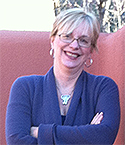
ABOUT WENDY STETINA: Wendy Stetina is a sales and marketing professional with over 30 years experience in the printing and publishing industry. Wendy works as the Director of Author Services for Outskirts Press. The Author Services Department is composed of knowledgeable customer service reps and publishing consultants; and together, they all focus on educating authors on the self-publishing process in order to help them publish the book of their dreams. Whether you are a professional looking to take your career to the next level with platform-driven non-fiction, or a novelist seeking fame, fortune, and/or personal fulfillment, Wendy Stetina can put you on the right path.

The Difference Between AP and Chicago Style

In order for your book to appear professional, you must maintain a consistent style throughout your manuscript. When I say “style,” I am referring to elements such as spelling, grammar, and punctuation. There are several different styles used by various types of publications, but the two most common are AP and Chicago. Which style you follow depends on what you are writing. For instance, AP is often used by newspapers while Chicago is preferred by book publishers. Here is a breakdown of just a few of the differences between AP and Chicago style.

Since AP style is often used by newspapers, there is an emphasis on saving space and time. For instance, AP style requires you to spell out numbers one through nine and to use numerals thereafter. Chicago, on the other hand, has you spell out numbers one through ninety-nine. Another major difference is the use of the serial comma: AP style does not use the serial comma while Chicago style does. Of course, many publications also create in-house style guides that make exceptions to the preferred style manual. For instance, if a publication uses AP style but wishes to use the serial comma, it can add this exception to its in-house style guide.

Since there are so many differences between AP and Chicago style, it is best to focus on learning the style you plan to use. There is no need to learn all of the other styles if you aren’t using them. Also, it is beneficial to hire a copyeditor to check for style consistencies. Copyeditors are highly skilled in a specific or numerous styles, and they have been trained to look for various errors that are common in manuscripts. Even the best writers can benefit from the eye of a good copyeditor.

I’d love to know, which style do you prefer: Chicago or AP?

ABOUT WENDY STETINA: Wendy Stetina is a sales and marketing professional with over 30 years experience in the printing and publishing industry. Wendy works as the Director of Author Services for Outskirts Press. The Author Services Department is composed of knowledgeable customer service reps and publishing consultants; and together, they all focus on educating authors on the self-publishing process in order to help them publish the book of their dreams. Whether you are a professional looking to take your career to the next level with platform-driven non-fiction, or a novelist seeking fame, fortune, and/or personal fulfillment, Wendy Stetina can put you on the right path.

How to Use the Copyright Symbol When Self-Publishing Your Book

One of the most confusing topics for self-publishing authors is copyright laws. Many authors want to know if they need to place the copyright symbol( © ) into their manuscripts and if so, where. Here is how it works.

Your manuscript is protected by copyright laws as soon as you write it. It does not have to have a symbol to be protected. Most authors trust the people they send their manuscripts to and therefore do need to have the copyright symbol displayed . Also, professionals in the industry, such as publishers or agents, may see you as an amateur since it is not necessary to register your copyright until publication.

However, if you feel more comfortable displaying the symbol on your manuscript, you can. The correct method is to insert the symbol followed by the year and your first and last name. It should appear on the title page only! Do not insert it elsewhere in the manuscript. If you want your manuscript to be treated professionally, it needs to follow the industry format.

It is also important to point out that you do not need to go through the trouble of registering the copyright with the government until the book is published. Most likely, you will make changes to the content of your book before it is published, so you want to wait until everything is finalized before you pay for a copyright.

You can learn more about copyrights at www.copyright.gov.

Also, check out these other posts on the topic.

The Importance of Copyrights and Trademarks for Self-Published Authors

Are Titles Copyrighted?

Six Frequently Asked Copyright Questions


ABOUT WENDY STETINA: Wendy Stetina is a sales and marketing professional with over 30 years experience in the printing and publishing industry. Wendy works as the Director of Author Services for Outskirts Press. The Author Services Department is composed of knowledgeable customer service reps and publishing consultants; and together, they all focus on educating authors on the self-publishing process in order to help them publish the book of their dreams. Whether you are a professional looking to take your career to the next level with platform-driven non-fiction, or a novelist seeking fame, fortune, and/or personal fulfillment, Wendy Stetina can put you on the right path.

You Don’t Need a Degree to Publish a Book

During my years in the publishing industry, I’ve often been asked the same question: Do I need a college degree to publish a book? The answer is simple: No! There are many cases of excellent books that were written by people who didn’t have a college degree: how many times have you heard the success story of a school-aged kid publishing a book? Likewise, highly educated individuals with advanced degrees in writing often never publish a book. That is because traditional publishing is difficult. It has nothing to do with how educated you are and more to do with what books are selling and what books editors and agents are willing to promote.

But don’t let that news discourage. In today’s world, traditional publishing is not the only option. You don’t have to sit around waiting for someone to finally buy your manuscript. You can choose to self-publish and see your book in print within a few months. Don’t worry: as the self-publishing industry continues to grow, the authors are becoming more and more respected. If you believe in your book, don’t wait for someone else’s approval; share it with the world.

ABOUT WENDY STETINA: Wendy Stetina is a sales and marketing professional with over 30 years experience in the printing and publishing industry. Wendy works as the Director of Author Services for Outskirts Press. The Author Services Department is composed of knowledgeable customer service reps and publishing consultants; and together, they all focus on educating authors on the self-publishing process in order to help them publish the book of their dreams. Whether you are a professional looking to take your career to the next level with platform-driven non-fiction, or a novelist seeking fame, fortune, and/or personal fulfillment, Wendy Stetina can put you on the right path.

What is Narrative Nonfiction?

As a self-published author, you are asked to choose a genre for your book. The easy part is deciding whether your book is fiction or nonfiction. The more difficult part is determining what type of fiction or nonfiction to categorize your book.

Basically, there are two types of nonfiction books: narrative nonfiction and prescriptive nonfiction. All biographies and memoirs are considered narrative nonfiction, while how-to books are described as prescriptive nonfiction.

Remember, if you are writing a memoir, you must be able to attest to the accuracy of the details. In addition, the story must have the same elements as fiction stories: a beginning, middle, and end as well as conflict, interesting characters, setting, etc. If your memoir doesn’t meet these standards, you may want to write a fictional story loosely based on real life. This allows you to add information to create a better story and protects you from possible legal issues.

ABOUT WENDY STETINA: Wendy Stetina is a sales and marketing professional with over 30 years experience in the printing and publishing industry. Wendy works as the Director of Author Services for Outskirts Press. The Author Services Department is composed of knowledgeable customer service reps and publishing consultants; and together, they all focus on educating authors on the self-publishing process in order to help them publish the book of their dreams. Whether you are a professional looking to take your career to the next level with platform-driven non-fiction, or a novelist seeking fame, fortune, and/or personal fulfillment, Wendy Stetina can put you on the right path.