4 Ways to Find a Great Ghostwriter

A great ghostwriter can help make your dreams of self-publishing a book come true. Whether you are too busy to finish your book project or need the assist of someone with excellent writing skills, you need to find a ghostwriter who is experienced and trained but who also meshes well with your personality.

When interviewing ghostwriters, be sure to ask about their education and work background as well as writing projects they have completed. Don’t be turned off by a writer who hasn’t completed a book exactly like your project because hopefully, your book is a one-of-a-kind idea. Instead, look for a writer with excellent writing and organizational skills. Having some background knowledge in your subject may also be a good idea, but most writers are magnificent researchers and enjoy learning about new topics.

Even more important than the writer’s background is the writer’s personality. When interviewing ghostwriters, ask about their work habits and expectations. Think of hiring a ghostwriter as dating someone new. You will be spending a lot of time working with this person, so you want to make sure you connect with the writer. There is no perfect way to determine if a ghostwriter is a good fit for you and your project. You just need to trust your gut.

So where do you find the perfect ghostwriter? Here are four places to look.

1.) Ask for references – If you know other authors who have used a ghostwriter, ask for references. They will be more than happy to share their experiences with you. This is a great way to find a writer who will do a great job because you can often trust other writer’s opinions.

2.) Check out your self-publishing company – Some self-publishing companies offer ghostwriting services. They will match you up with a ghostwriter that meets your needs. This is another great way to ensure you are hiring a reputable writer because self-publishing companies will only use writers they trust to produce great work.

3.) Search the web – If you go to your favorite search engine and type in “ghostwriter for hire” or other related keywords, you will find links to various writers’ websites. If you choose to go this route, be sure to thoroughly research the writer. Just because they have a website doesn’t mean they are qualified to do the job.

4.) Post a job ad – There are plenty of websites that allow you to post a listing looking for a writer. Be sure to include as many details about the project as possible and explain your expectations. One great place to begin is the Association of Ghostwriters.

I’d love to know, where did you find your ghostwriter?

ABOUT WENDY STETINA: Wendy Stetina is a sales and marketing professional with over 30 years experience in the printing and publishing industry. Wendy works as the Director of Author Services for Outskirts Press. The Author Services Department is composed of knowledgeable customer service reps and publishing consultants; and together, they all focus on educating authors on the self-publishing process in order to help them publish the book of their dreams. Whether you are a professional looking to take your career to the next level with platform-driven non-fiction, or a novelist seeking fame, fortune, and/or personal fulfillment, Wendy Stetina can put you on the right path.

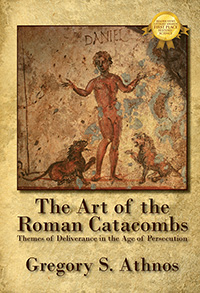
Weekly Self-Published Book Review: The Art of the Roman Catacombs

Book reviews are a great way for self-publishing authors to gain exposure. After all, how can someone buy your book if he or she doesn’t know it exists? Paired with other elements of your book promotion strategy, requesting reviews is a great way to get people talking about what you’ve written.

When we read good reviews, we definitely like to share them. It gives the author a few (permanent) moments of fame and allows us to let the community know about a great book. Here’s this week’s book review by Midwest Book Review:

The Art of the Roman Catacombs: Themes of Deliverance in the Age of Persecution

Gregory S. Athnos

Publisher: Outskirts Press

ISBN: 9781432774493

Reviewer: Vicki Liston


One would think that by reading a book about the art that adorns the Roman catacombs, one would purely concentrate on analyzing the style and technique of the ancient artists. However, author Gregory S. Athnos presents his thoughts on the subject from a unique and fascinating angle. “The Art of the Roman Catacombs: Themes of Deliverance in the Age of Persecution” is not your typical Sunday school lecture.

“The Art of the Roman Catacombs” is an amazing journey into the subterranean world of early Christian tomb frescos. While Athnos does make distinction between the rudimentary plaster scratchings and the sarcophagi carvings, he focuses mostly on the main themes of the artwork and how they differ from our current day Christian emphasis. Specifically, we tend to center our minds on the sacrifice – the crucifixion of Jesus Christ – when practicing Christianity. Athnos shows, through example after surprising example, that early Christians didn’t include crosses or any references to sacrifice or death in their art. Instead, they emphasize the resurrection and the newfound power over death. The messages they left were of hope, of deliverance, and of eternal life.

I found the first appendix at the end of the book to be especially interesting. Athnos uses recorded astrological events, historical data, and seasonal information to pinpoint Jesus’ birthday … and it’s not what you think. I grew up believing what he explains although I only had the “shepherds couldn’t have been out in the fields at night in December” reasoning. Athnos not only presents this appendix with ample information to back up his theory but can even utilize the catacomb art to further justify it. I was simply blown away.

Athnos writes with an authoritative tone, speaking with intelligence and eloquence. His style is straightforward and organized, which gives the book a sense of direction and flow. He also succeeds in imparting his enthusiasm on the subject to his readers. Overall, I found his novel way of interpreting the tomb art to be absolutely captivating. I think this would be a fantastic book for not only Bible historians but for small group Bible studies. Further, tourists looking to explore the catacombs would enjoy reading the book before visiting; I know I would have loved to have this before my travels there. It truly gives a fresh perspective on traditional Christianity.

“The Art of the Roman Catacombs” represents a thirst for greater knowledge, empathy for those early Christians living during the Age of Persecution, and a hope that those reading will have a better understanding of what the emphasis was in the religion’s beginnings.

Five Ways Self Published Authors Can Improve Blog Traffic

By now you know that self-published authors must have an online presence. One of the best ways to build your online platform and promote yourself and your book is blogging. However, a blog is only useful if you are regularly attracting your target readers. Your goal is not to simply post a certain number of blogs per week but to also build an audience and increase the traffic to your blog. Here are a few ways to improve your blog traffic.

1. Study the numbers.

Most blogging programs monitor how many people visit your blog and what content they view. Often it also tells you how the readers found your blog. For instance, if someone discovered your blog by searching the key words “self published” and “children’s book author,” that is important information. You want to pay attention to what keywords are bringing in readers and what content readers are viewing. This will help you further target your audience and will tell you if you are attracting the right readers.

2. The key is new, useful content.

If you want to improve your blog traffic, you MUST regularly post new, useful content. People expect blogs to updated almost daily, and they want to read information that helps or interests them in some way. When choosing blog topics, ask yourself, “Why would my audience read this?” If your audience won’t find it helpful or interesting, don’t post it.

3. Tone down the keywords.

Yes, keywords are important because you want your blog to appear in search engine results. However, you also want your blog to sound genuine. Readers hate when blogs are crammed with keywords. They can tell when you tried to stuff as many keywords as possible into your posts. Keep the writing natural, and the keywords will happen on their own. It is also useful to use synonyms for keywords. Remember how your English teachers told you to expand your vocabulary and never use the same word multiple times in a paragraph or sentence? The same is true for blogging. Readers still expect good writing.

4. Edit! Edit! Edit!

Everything you put online represents you as an author. If you want to be taking seriously and be viewed as a professional, all of your online work must  be professional. Never post a blog without proofreading it. Remember all of the grammar and writing tips your English teachers have taught you. While there is more flexibility in online writing, readers still expect the work to be professional. If grammar and spelling are not your strengths, hire a professional to proofread your posts.

5. Share links.

The power of social media is unbelievable. Bloggers get more traffic from social media than search engine results. Always share links to your posts on your social media pages. Also encourage your followers to share your links. (Retweeting a fellow blogger’s links is a great way to earn brownie points.) However, don’t use social media solely to promote your blog. Followers like to build genuine relationships with the companies and people they follow, and they don’t use social media to constantly be sold to.

Building a great blog requires time and skills. If you aren’t able to commit to maintaining a great blog, you can hire someone to help. There are plenty of professionals who can write, edit, and manage your posts. Just because you are the author of the blog doesn’t mean you have to do all the work alone.

I’d love to know, what have you done to improve your blog traffic?

ABOUT WENDY STETINA: Wendy Stetina is a sales and marketing professional with over 30 years experience in the printing and publishing industry. Wendy works as the Director of Author Services for Outskirts Press. The Author Services Department is composed of knowledgeable customer service reps and publishing consultants; and together, they all focus on educating authors on the self-publishing process in order to help them publish the book of their dreams. Whether you are a professional looking to take your career to the next level with platform-driven non-fiction, or a novelist seeking fame, fortune, and/or personal fulfillment, Wendy Stetina can put you on the right path.