Self-Publishing Weekly Book Review: The Strange Life of Walenty Karnowski

Book reviews are a great way for self-publishing authors to gain exposure. After all, how can someone buy your book if they don’t know it exists? Paired with other elements of your book promotion strategy, requesting reviews is a great way to get people talking about what you’ve written.

When we read good reviews, we definitely like to share them. It gives the author a few (permanent) moments of fame and allows us to let the community know about a great book. Here’s this week’s book review by Midwest Book Review:

The Strange Life of Walenty Karnowski

Gerald R. Schimidt

Publisher: Outskirts Press

ISBN: 9781432772260

Faith can be a wonderful thing, but at the same time, it is the catalyst for violence. “The Strange Life of Walenty Karnowski” delves into a conflict of 1842, where Catholics, Lutherans, and Jews go to a subtle war over those who worship evil in the forests of Poland.”The Strange Life of Walenty Karnowski” brings readers in without pulling any punches on faith, and the novel depicts what people do in the name of faith. This book is highly recommended.

Top 5 Reasons to Self-Publish in October

Has publishing your book been on your to-do list for months, or even years? Does your book always get pushed to the end of your to-do list because you are overwhelmed with work and home responsibilities? Are you one of those people who always finds a reason to wait? Well, wait no more. October is the perfect time to self-publish your book and begin your life as a published author. Here is why.

Complete Your 2011 News Year’s Resolution

When the clock struck 12 on January 1, 2011, did you vow to publish a book this year? Now that it is October, are you feeling guilty for not fulfilling that resolution? Well, if you self publish in October, your book will be complete by the end of the year. A high quality self-published book typically takes 6-15 weeks to complete. If you start now, your book will be done by the end of 2011.

Get a Head Start on Your 2012 Resolution

So maybe publishing wasn’t one of your resolutions last year, but you want it to be one of your resolutions next year. Why not get a head start, and start the self-publishing process now? This way, you can show off your new book in 2012 instead of rushing to publish before the year is over.

It’s A Great Time for Spooky Reads

Do you write horror or thrillers? Do you want to write a children’s book about Halloween? October is a great month to work on these projects. The cool air and pumpkin lattes at your favorite coffee shop can set the tone for a fall book and help motivate you to complete a great Halloween stories.

Avoid the Holiday Chaos

November through January are the busiest months for most people. You are scrambling around to shop for gifts, bake goodies and attend holiday parties. If you self-publish in October, you can start the process before you become consumed by twinkling lights and sugar cookies.

Mad Money

Throughout the month of October, Outskirts Press is running the Mad Money promotion. When you sign up for a Diamond or Pearl package, Outskirts Press will add $300 to your account. You can use the money towards any pre-production services such as a custom book cover or marketing solutions.

So what are you waiting for? Make October the month you made your dreams come true.

ABOUT WENDY STETINA:
Wendy Stetina is a sales and marketing professional with over 30 years experience in the printing and publishing industry. Wendy works as the Director of Author Services for Outskirts Press. The Author Services Department is composed of knowledgeable customer service reps and publishing consultants; and together, they all focus on educating authors on the self-publishing process in order to help them publish the book of their dreams. Whether you are a professional looking to take your career to the next level with platform-driven non-fiction, or a novelist seeking fame, fortune, and/or personal fulfillment, Wendy Stetina can put you on the right path.

Self-Publishing Weekly Book Review: Adventures in Political Theory

Book reviews are a great way for self-publishing authors to gain exposure. After all, how can someone buy your book if they don’t know it exists? Paired with other elements of your book promotion strategy, requesting reviews is a great way to get people talking about what you’ve written.

When we read good reviews, we definitely like to share them. It gives the author a few (permanent) moments of fame and allows us to let the community know about a great book. Here’s this week’s book review by Midwest Book Review:

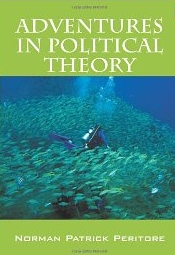
Adventures in Political Theory

Norman Patrick Peritore

Publisher: Outskirts Press

ISBN: 1432750194

Reviewer: Clark Isaacs

Throughout history, there have been many great thinkers who have challenged our thoughts. “Adventures in Political Theory” is Norman Patrick’s walk through the many thoughts in history and how they have shaped our history. From Socrates to the raging modern political debate, there have been many people who have changed the way people think. These leaders form the basis of our intellectual future. “Adventures in Political Theory” is worth considering for its wide reaching history. It is highly recommended.

Trade Discounts and Distribution: One of the Many Self-Publishing Perks

The self publishing industry is a reaction to the traditional publishing industry. For years, the only option for authors to see their manuscripts published was to hire an agent and/or submit their manuscripts to the traditional houses in hopes of being selected for publication. In most cases, this process took many years, involved substantial changes to the manuscript and most importantly, forced the author into giving up the rights. Retail pricing and the author’s royalties were out of the author’s control as well. Self-publishing allows authors to maintain control over their material and allows them to select the type of distribution that is appropriate to their material and marketing goals.

Speaking of distribution the desire for shelf space is always a popular subject for new authors, and its requirements are very strict. Books that make it onto the shelves of the brick and mortar chain book stores have to carry a very high trade discount (50% to 55%). “Trade discount” is our industry specific term for “profit margin.” For example, when you purchase a book within a Barnes & Noble bookstore for $14.95, 55% of the retail price ($8.22) is divided between the store and the wholesale distributor for their profit. When you subtract the $8.22 from the $14.95, you are left with $6.73. This remainder covers the cost of the actual book. The balance that is left after the price of the book is the author royalty. Typically, authors receive very low royalties in these scenarios.  

In addition to needing a high trade discount, authors also need to provide the bookstore with a “Retail Returns Program.” This program allows the bookstores to return books to the wholesaler and get their money back if the books do not sell. You must provide this program to the retailers, but having it is no guarantee that they will agree to stock your book. 

Conversely, authors that elect to focus on internet sales may select a much lower trade discount as the internet book sites do not require as large of a profit margin. So that same $14.95 retail priced book under a 25% trade discount would look like this mathematically: $14.95 – $3.74 (25% of the retail price) = $11.21 – the actual cost of your book = your royalty. Obviously, $11.21 is a larger number than $6.73. Therefore, your royalty will be greater if sold by an online distributor, assuming the cost of your book remains the same in each equation.

Freedom to choose your trade discount and distribution center is just one of the many perks of self publishing. To learn more about trade discounts, check out Cheri’s post titled Trade Discounts 101. It provides a great overview of industry standards and questions to ask yourself before setting your discount.

ABOUT WENDY STETINA:
Wendy Stetina is a sales and marketing professional with over 30 years experience in the printing and publishing industry. Wendy works as the Director of Author Services for Outskirts Press. The Author Services Department is composed of knowledgeable customer service reps and publishing consultants; and together, they all focus on educating authors on the self-publishing process in order to help them publish the book of their dreams. Whether you are a professional looking to take your career to the next level with platform-driven non-fiction, or a novelist seeking fame, fortune, and/or personal fulfillment, Wendy Stetina can put you on the right path.

Trade Discounts 101

The price of your book is an important detail. It impacts which readers will purchase your book as well as how much money you will make on royalties. The price of your book is based on a variety of factors; one of the most essential elements is the trade discount. This is also referred to as  the distributor discount. To new authors, this concept can seem confusing, but it is as simple as the 5Ws.

What is the trade discount?

The trade discount is the discount you offer to the distributor of your book. This includes retailers, wholesalers, and online distributors. This discount can range from 0% (no distribution) to 100% (highly unlikely).

Who sets the trade discount?

Sometimes the discount is set by the publisher; other times it is set by the author. This usually depends on the publishing company, and your agreement with the company. Self-published authors usually have more freedom in this decision. For instance, Outskirts Press allows authors to set their trade discount based on their goals and needs.

When do I select a trade discount, and can I change it later?

The trade discount is typically determined prior to publication. While it can be changed at anytime, it is not recommended. This can disrupt the author/distributor relationship and may result in additional expenses for the author.

Where will your book be available when choosing certain discounts?

Different distributors expect different discounts. For instance, the minimum trade discount for online distribution is 20%. Retail stores, however, expect a 40-55% discount. They also expect the book to be fully returnable. Wholesale Clubs, such as BJ’s and Sam’s Club, expect a 60-75% discount. It is important to consider your goals as an author. Where do you want your book sold? Where do your readers purchase books? Understanding your target audience will help you determine the best strategy for your book.

Why do I offer a trade discount?

This discount determines the price the distributor pays for your book. It is typically referred to as the wholesale price. The distributor then sells your book at a higher price and keeps the profit. Distributors must be able to make a profit on your book or they won’t carry it. The trade discount also impacts your royalties. The higher your discount, the lower your royalties. Therefore, it is important to set a discount that is beneficial to both you (the author) and the distributor. The goal is for both parties to sell books and make a profit.

When setting your trade discount, be sure to consider your goals as an author, and don’t forget to analyze your target audience. For instance, if your readers buy the majority of their books online, you may not want to focus on retail stores. Also, make sure you do plenty of research before setting a trade discount. Find out what other authors are offering and what your target distributors expect. Also, factor in the number of potential sales and your royalty rate. And always remember, the publishing industry is about both the author and the retailer. Don’t be afraid to negotiate and compromise.

Cheri Breeding ABOUT CHERI BREEDING:
Since 2005 Cheri Breeding has been working as the Director of Production for Outskirts Press. In that time, she has been an instrumental component of every aspect of the Production Department, performing the roles of an Author Representative, Book Designer, Customer Service Representative, Title Production Supervisor, Production Manager and, Director of Production. She brings all that experience and knowledge, along with an unparalleled customer-service focus, to help self-publishing authors reach high-quality book publication more efficiently, professionally, and affordably.