Weekly Self-Published Book Review: Romance With A Touch of Love

Book reviews are a great way for self-publishing authors to gain exposure. After all, how can someone buy your book if he or she doesn’t know it exists? Paired with other elements of your book promotion strategy, requesting reviews is a great way to get people talking about what you’ve written.

When we read good reviews, we definitely like to share them. It gives the author a few (permanent) moments of fame and allows us to let the community know about a great book. Here’s this week’s book review by Midwest Book Review:

Romance With A Touch of Love

Kevin Hollingsworth

Publisher: Outskirts Press

ISBN: 9781432771386

Reviewer: William Phenn

“Romance With A Touch of Love” is a quaint little poetry book that one could be read from start to finish while waiting for the doctor.

Do not be fooled by its short 23 pages. For its length, it packs an entertaining read on every page. Mr. Hollingsworth has a descriptive style that brings you into his thoughts; you can envision what he is remembering and what he sees in his mind.

Beginning with “American Princess,” you can imagine what she looks like from his descriptive verbiage; you can almost feel “the softness of her skin.” Then, in “Death and Marriage,” you feel the anguish that he has over his lost love. For such a religious man as Kevin Hollingsworth seems, it is a tragic blow to his faith when his prayers are not answered.

In an attempt at a dark poem, Kevin Hollingsworth pens one called “Alone.” In it, he describes the stark realization he has that “she” is gone. The torment of such a thought leaves him in agony with only “loneliness admiring him.”

I thought that “Romance With A Touch of Love” by Kevin Hollingsworth was entertaining for its short few pages. I would have liked to have read more of Mr. Hollingsworth’s work and wished that this brief sample of his literary talent would have continued for at least another twenty-five pages, but that is not the case. I gave it a well-deserved B on my scale, and although I think it a bit pricey for only 23 pages, it is a good read. I would recommend it to a general audience since it does not contain anything that would be objectionable to minors.


Weekly Self-Published Book Review: Hero O’Reilly And The Phantom Hacker

Book reviews are a great way for self-publishing authors to gain exposure. After all, how can someone buy your book if he or she doesn’t know it exists? Paired with other elements of your book promotion strategy, requesting reviews is a great way to get people talking about what you’ve written.

When we read good reviews, we definitely like to share them. It gives the author a few (permanent) moments of fame and allows us to let the community know about a great book. Here’s this week’s book review by Midwest Book Review:

Hero O’Reilly And The Phantom Hacker

White, K.G.

Publisher: Outskirts Press

ISBN: 9781432780999

A help-desk specialist at Bank of Virginia finds love and adventure while solving the mystery of who’s hacking her company’s computer network.

Hero O’Reilly is named after a character in a Shakespeare play, as are her four sisters. She’s resourceful and gutsy, answering each and every help-desk request with a different name and never using the same moniker twice. Humorously self-deprecating, she’s addicted to Peeps (only in supply during major holidays), the music of Michael Feinstein and the word “hinky”—a techie term for the weird. Plus, she’s ballsy enough to put on platform shoes whenever she meets with attractive but creepy VP Ken Churchill. Hero’s neighbor, landlady and BFF is dog-owner Sally, who’s supportive and amusing in her own right. To celebrate her parents’ 30th wedding anniversary, Hero and her sisters meet for a makeover and professional photo shoot. Suddenly, it’s raining men: friend and coworker Mongrel notices Hero as a woman, FBI agent Mark Falcone pursues her with gusto and smitten photographer Alex might not be gay after all. Hero has so much sex she fears the onset of post-coital dementia. But someone’s hacking into the company’s network and Hero is headed for danger. There’s plenty of goods here, not the least of which is a strong voice and a well-defined central character reminiscent of Sandra Bullock in Miss Congeniality—a cute, dark-haired, nut-breasted klutz; but then the ignored neophyte gets a new ’do, sees herself in a different way and captures the attentions and affections of a first-rate FBI guy. The book almost oozes with energy. Numerous misspellings, missing words and punctuation errors detract but the meaning is unimpeded. The back story of Hero’s life, romantic interludes and interaction with associates and family—including her devoted parents who lovingly speak Gaelic—holds together well, before taking a slightly silly turn into the overdone procedural of bringing a criminal mastermind to justice. Again like Miss Congeniality, the far-fetched hacker plot doesn’t make a lot of sense, functioning primarily as a device on which to hang the romance–rescue. The last third of the book is an above average mystery–rom-com, which is more than enough for many a reader.

A hysterical adventure-romance, with a distinctive voice and a strong protagonist, that takes a tumble at the critical moment.

Weekly Self-Published Book Review: Power and Tender

Book reviews are a great way for self-publishing authors to gain exposure. After all, how can someone buy your book if he or she doesn’t know it exists? Paired with other elements of your book promotion strategy, requesting reviews is a great way to get people talking about what you’ve written.

When we read good reviews, we definitely like to share them. It gives the author a few (permanent) moments of fame and allows us to let the community know about a great book. Here’s this week’s book review by Midwest Book Review:

Power and Tender

Margret Russell

Publisher: Outskirts Press

ISBN: 9781432763756

Reviewer: Richard R. Blake

Margret Russell chronicles the lives of Arthur, Ben and Hannah Alton during the years immediately following World War I throughout the years leading up to and through World War II in “Power and Tender.” This is more than a nostalgic stroll down memory lane. Russell writes of a significant era in American history. Through the Alton’s, she follows the impact and hardship experienced by rural families at a time when our country shifted from its agricultural roots to a culture of international trade, commerce and industry.

Ben develops a love for the sea as a child, the result of hearing his uncle’s heroic stories. He dreams of becoming a coastal pilot in Chesapeake Bay. Ben is devastated after years of perseverance in combining, working the land with his love for the water, boating and fishing; he has attained the theory and experience necessary to qualify for an appointment as a government pilot only to discover that the years of hard labor have left him physically disqualified.

Russell introduces a plethora of topics relative to the era through dialog depicting casual, gossipy conversation through informal settings at the town post office, the barber shop, in the home or during routine chores and errands. Although often these seem irrelevant, they provide background and insight into the culture of the era, family life and individual struggles of the protagonist.

The journal entries of Evan Griffith, a professor employed during the summer by Ben Alton, afford additional points of interest and offer a noteworthy depth. They take shape as chapter summaries, adding insight into the interaction and core values of the Alton family. Lessons on parenting, family and social relationships and insights into plant life and animal behavior are carefully woven into the warp and woof of the story line.

I have a new appreciation for the difficulties of the farming communities, crop failures and food surpluses in the great depression era experienced throughout the country in the 1930s, as well as a better understanding of President Roosevelt’s “New Deal” philosophy and policies.

Russell keeps the reader engaged thorough a fast-paced series of conflict and resolution. She skillfully incorporates expressive descriptions that involve all five senses. I could almost hear the howl and feel the force of the gale force winds, smell the charred scent of the smokehouse and feel “the burning in the wood stove…it sizzled and lapped the logs down to knot heating to a bursting point – poupft.”

“Power and Tender” is engaging historical fiction. The writing is authentic and compelling. I became totally immersed in the characters. This is a memorable read with a lingering afterglow.


Weekly Self-Published Book Review: Philosophy: Structuralism for Unity: Visions of Truth for Justice and Success


Book reviews are a great way for self-publishing authors to gain exposure. After all, how can someone buy your book if he or she doesn’t know it exists? Paired with other elements of your book promotion strategy, requesting reviews is a great way to get people talking about what you’ve written.

When we read good reviews, we definitely like to share them. It gives the author a few (permanent) moments of fame and allows us to let the community know about a great book. Here’s this week’s book review by Midwest Book Review:

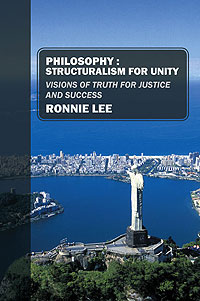
Philosophy: Structuralism for Unity: Visions of Truth for Justice and Success

Ronnie Lee

Publisher: Outskirts Press

ISBN: 9781432771836

Reviewer: Joseph Yurt

Prolific self-published author Ronnie Lee has recently released his tenth book presenting his philosophical thinking. Titled “Philosophy: Structuralism for Unity,” this book, like his others, is a tome. Over the course of 821 pages, Lee offers an expanse of thoughts that at their core form the foundation of his writings in general. The writings in this volume specifically address society and law, business and responsibility, politics, war, religion and morality, philosophy and existentialism, and life and unity. With regard to these fundamentals, the book is in essence a one volume encyclopedia of Lee’s philosophy, and as such, is both a reference book and a collection of philosophical poetry and prose.

It is important for readers who are unfamiliar with Lee’s other books to be aware that the author’s preferred writing style is free form poetry. He has honed his content framework and creative writing device to a very sharp edge. Consider, from Chapter 6, Philosophy and Existentialism, an excerpt from the poem entitled The Mind: “The mind is the end result, Of what you have been through. This creates your psychological loops, That are often entangled, In happiness and sadness loops, Hope and despair loops, And success and failure loops.” Some might perceive this style to be cutting edge, while others will perhaps regard it as a bit of a gimmicky way to slice and dice sometimes deep content into small bites. But whether it is either of these or both, my perception is that stylistically, what the author is trying to communicate is more approachable and easier to grasp as a result.

And it seems to me that what Ronnie Lee is trying to say, between the lines of his philosophy in this book, is simply this: we are overwhelmed with information resulting in confusion and conflict; we can change this if we create “structure and unity in what we are told, and what we take in. Love, security and justice will follow in greater measure when there is a solid, coherent foundation to build on.”

In my opinion, “Philosophy: Structuralism for Unity” is best described as a philosophical grand unified theory in Lee’s search for an elusive Philosophy of Everything. Considering the scope of the fundamentals that Lee covers the book is surprisingly concise and coherent. Most importantly, the author speaks clearly, and with one consistent voice.

Ronnie Lee’s “Philosophy: Structuralism for Unity” may appear daunting at first glance. And I believe that if a reader attempts to read it straight through, it will indeed lead to philosophy overload. But if read at one’s leisure, at their own pace, this book just may become a touchstone over time for many who are seeking clarity and hope in their lives. For me it would be a comforting book to have on the shelf.

Weekly Self-Published Book Review: I Want To Know My Future

Book reviews are a great way for self-publishing authors to gain exposure. After all, how can someone buy your book if he or she doesn’t know it exists? Paired with other elements of your book promotion strategy, requesting reviews is a great way to get people talking about what you’ve written.

When we read good reviews, we definitely like to share them. It gives the author a few (permanent) moments of fame and allows us to let the community know about a great book. Here’s this week’s book review by Midwest Book Review:

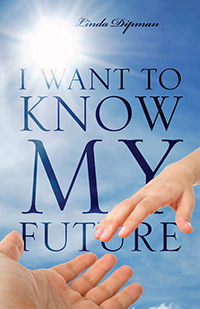
I Want To Know My Future

Linda Dipman

Publisher: Outskirts Press

ISBN: 9781432773526

Reviewer: Carol Hoyer, PhD,

Elizabeth thought she had the ideal life — a wonderful loving husband and great kids and faith in God. What she didn’t know was all of that would be tested when she and her husband Eric got a divorce. Eric was highly involved in their church and presented himself as an upstanding citizen and loving husband, but behind closed doors, he was totally different. He seemed intent on getting revenge on Tori, his wife’s good friend, as he thought they were having a homosexual relationship. He was embarrassed about the relationship and started turning the church against Elizabeth and Tori.

Tori had her own set of problems as she got an emergency divorce from her abusive husband, Alan. Not only had Alan verbally, emotionally and physically abused her, he did the same to their son. Due to the abuse Alan inflicted on his son, there was some concern the son might have a learning disability or brain damage, but Alan wouldn’t do what the courts asked him to do in getting his son evaluated.

Even though Elizabeth and Tori were doing all they could to get custody of their children, they realized that they were fighting a corrupt court system and an intoxicated judge. In one final desperate attempt, Tori and Elizabeth decided to run away with their children. All this did for them was land them in jail and irritate their ex-husbands even more.

Both Elizabeth and Tori were tired of fighting the system, their church and their parents, so they turned to God to let it be in his hands. Each and every time they were tested, God found a solution for them. God spoke to them in a variety of ways, always ensuring them that he had made them into the people they were and no one else had the power to do that. Elizabeth took the spoken words of God and studied the messages, read her Bible and learned how God chose to make some with homosexual lifestyles.

Once readers start “I Want To Know My Future” by Linda Dipman, they will not be able to put it down. It is fast paced, keeps your interest and keeps you on the edge of your seat. Through the book, when Elizabeth is going through a crisis or tough times, God speaks to her by saying “My ways are not human ways. Trust in me. God has spoken.” “I Want To Know My Future” isn’t just about leading a different lifestyle; it is about how God hears prayers and guides all his children through life.