Conversations With A Self-Publishing Writer: 10/09/2015

THE NOAH WEBSTER LEGACY – PART II

Noah Webster was (as the saying goes) a complicated man. After graduating from Yale with a B.A. degree in 1778 he couldn’t seem to hold a job. He was qualified to teach the basic liberal arts studies (back in a one-or-two-room school house) but wanted to study Law so he resigned. In order to go back to school—being instructed by Oliver Ellsworth (the future Supreme Court Chief Justice)—he needed financial income so again began teaching full-time. However, the load of teaching and law studies was too much to handle. History tells us that he fell into a depression when quitting both positions.
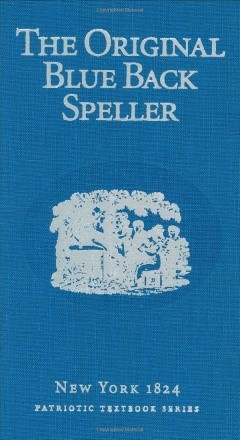
blue book speller

How many writers have experienced this emotional component of reaching for their dreams only to discover the heaviness of the challenge as they’ve balanced full-time jobs while developing their book or book series? This is rarely discussed, and yet Webster is an excellent example of fighting his way back—tapping into his educated, emotional and passionate self which he expressed in writing.

As the Revolutionary War continued, George Washington passed through the New Haven area and Webster (who played the flute) joined a group of supporters/students who serenaded Washington and his troops. Shortly thereafter, Webster, his brothers and father tried to join the Battle of Saratoga in New York but by the time they got there, the battle had been won by the American troops.

  • Thus it happened that Noah turned to writing as a way to channel his patriotic ambitions and he began writing a series of articles for a New England newspaper encouraging citizens and their American Revolution resolve.
  • Between 1783-1785 he also wrote his “Blue-Backed Speller” spending most of his time getting it published and announced. (It was later published in 1824 as “The Original Blue Back Speller: A Patriotic Textbook Series.”)
  • At the same time he was writing these books, Webster was also working on copyright legislation to protect the works of all writers.
  • His relentless book promotion pioneered now common techniques like the author tour, the fabricated blurb and the aggressive stoking of manufactured controversy,” says New York Times book reviewer Jesse Sheidlower, the editor at large of the Oxford English Dictionary and the president-elect of the American Dialect Society.
  • Webster was known for writing constantly under various pseudonyms. Doing so he would often praise his own works and deconstruct the arguments of his critics. This is still being done today on the Internet under the label of “sock puppetry.”

So here is what I’ve learned from Noah Webster today: (1) write myself out of melancholy; (2) focus my writing efforts on subjects that tap into my passions, compassions, interests and ambitions; (3) don’t hesitate to self-publish; (4) use every avenue available to promote my books; and (5) if necessary, be willing to face critics with straightforward discussion.

Webster strongly promoted what he called American-English building an American linguistic style of spelling and pronunciation that lives and continues to grow to this very day. Without intentionally setting out to do so I believe he has given all writers permission to utilize our language in new ways; to create new words and combined words and related definitions; to write beyond our current skills, develop concepts for generations yet unborn, and publish in paper books, on the Internet and venues yet to be discovered. ⚓︎

RoyaleneABOUT ROYALENE DOYLE: Royalene has been writing something since before kindergarten days and continues to love the process. Through her small business—DOYLE WRITING SERVICES—she brings more than 40 years of writing experience to authors who need “just a little assistance” with completing their projects. This is a nice fit as she develops these blogs for Outskirts Press (OP) a leading self-publisher, and occasionally accepts a ghostwriting project from one of their clients. Her recent book release (with OP) titled FIREPROOF PROVERBS, A Writer’s Study of Words, is already receiving excellent reviews including several professional writer’s endorsements given on the book’s back cover.  

Royalene’s writing experience grew through a wide variety of positions from Office Manager and Administrative Assistant to Teacher of Literature and Advanced Writing courses and editor/writer for an International Christian ministry. Her willingness to listen to struggling authors, learn their goals and expectations and discern their writing voice has brought many manuscripts into the published books arena.

Conversations With A Self-Publishing Writer: 10/02/2015

THE NOAH WEBSTER LEGACY

It was a gift from a friend—the 1828 American Dictionary of the English Language by Noah Webster.  Somewhere in my memory I recalled that Mr. Webster’s name appeared in a list of our nation’s Founding Fathers, however, I remembered nothing about the details of his life or legacy. The dictionary that has always resided on my shelf is the Merriam-Webster version and any association of the hyphenated name to Noah Webster had escaped me.

american dictionary of the english language

Yet, over the last decade of my writing endeavors (after receiving this gift), my appreciation of Mr. Webster continues to grow. Without his push toward education and his extensive work in defining words my abilities to develop such pieces as this blog would be sorely strained.  Here are a few facts to chew on…

  • Born in Hartford, Connecticut, Noah Webster, Jr. was raised in a very active environment, being homeschooled by his mother in spelling, math and music and observing his father’s activities beyond farming as Noah, Sr. was always intellectually curious and a supporter of education for everyone. He even mortgaged their farm so that Noah Jr. could attend higher education classes.
  • By the age of six, Noah joined neighborhood children in a dilapidated one-room primary school which could have dissuaded him from seeking further education because of teachers he later referred to as “the dregs of humanity.” (Are children today faced with that, too?) However, this experience only fortified his later desires to improve the educational experiences of future generations.
  • At the age of fourteen he was tutored in the languages of Latin and Greek preparing him for enrollment in Yale just before his sixteenth birthday.
  • This timeframe was also the season of our country’s revolution. Food shortages and the threat of the British invasion of mass military forces caused the president of Yale to scatter teachers to various towns where classes could safely be held.
  • Attempting to keep up with his classes, Noah still joined the Connecticut Militia. He believed that American nationalism was superior to Europe because American values were superior. Thus began his pamphlet writing career publishing them under the pen name “A Citizen of America.”

My hope in sharing this information with you today is to encourage you to KEEP WRITING even in the midst of life’s challenges.  The living (survival) conditions for folks in the late 1700s early 1800s left little time for “learning letters” let alone studies at “higher education” levels.  However, Webster (and many of his compatriots) knew that unless people were given the opportunity communicate with words (spoken or written) that carried a specific definition—a distinctly American definition—many more battles would be fought and lives needlessly lost.

Yes, word lists were being produced 2300 years ago in regions of Samaria. Yet many believe that it wasn’t until approximately 400 BC that a “vocabulary list…with meanings of rare Homer-style words and other words from local dialects” was produced. You and I live in an AGE OF WORDS with access to online dictionaries from around the world—times past and times present. How marvelous to enjoy such finger-tip definitions giving us the ability to creatively exercise our writing skills and produce the books that will inform and bring enjoyment to future generations. ⚓︎

RoyaleneABOUT ROYALENE DOYLE: Royalene has been writing something since before kindergarten days and continues to love the process. Through her small business—DOYLE WRITING SERVICES—she brings more than 40 years of writing experience to authors who need “just a little assistance” with completing their projects. This is a nice fit as she develops these blogs for Outskirts Press (OP) a leading self-publisher, and occasionally accepts a ghostwriting project from one of their clients. Her recent book release (with OP) titled FIREPROOF PROVERBS, A Writer’s Study of Words, is already receiving excellent reviews including several professional writer’s endorsements given on the book’s back cover.  

Royalene’s writing experience grew through a wide variety of positions from Office Manager and Administrative Assistant to Teacher of Literature and Advanced Writing courses and editor/writer for an International Christian ministry. Her willingness to listen to struggling authors, learn their goals and expectations and discern their writing voice has brought many manuscripts into the published books arena.

Conversations With A Self-Publishing Writer: 09/25/2015

OUR RIGHT TO WRITE AND PUBLISH IV

 Moving back to the concept of developing our writing wings, I must share with you one of my personal research projects. A favorite genre of mine is Historical Fiction. For years I’ve debated the concept that early pioneer journalists were today’s foundation of excellence and especially authenticity for authors of all writing genres. In most cases they had the bare minimum of publishing guidelines to follow yet gave the reading public the information needed and often a “rip-roaring” story of adventure and intrigue.

american progress
John Gast’s “American Progress”

To honor these pioneer journalists (many of whom turned book authors) I give you the example of Gene Amole who wrote a column for Colorado’s Rocky Mountain News from 1977 until his death in May, 2002. As I list several of his column themes and titles, let them inspire you to write something on one of these topics that jump out at you.  Actually, I hope there will be several.

  1. Bright lights—good memories
  2. It takes action to clarify writing
  3. There are only two kinds of music: good and bad
  4. Succumbing again to the allure of fine poetry.
  5. A message to carry…son of a friends brings a letter
  6. A leave of absence might be necessary to write a novel.
  7. The concept of home
  8. Honesty in writing: Pain becomes an ugly companion
  9. Are our perspectives getting a little out of whack?
  10. When folks try to write for big magazines, they try too hard.
  11. Interviews should be richly enjoyed by both parties
  12. We will always have something to write about IF we keep our eyes and ears open.
  13. Nothing chases the blues away like kind words.
  14. Memories can be fickle companions.
  15. READ…reflect…make new memories.
  16. On war.
  17. On music.
  18. On the Unsolved Murder of a 10-year-old boy.
  19. To a Newborn Grandson
  20. On senseless Deaths Going Unpunished
  21. “Good writing is a bridge on which minds meet, a bridge that the writer must build.” (from Amole’s conversations with author William E Barrett.)

We all have such unique perspectives on life and all the millions of events that occur close to home and far away.  Amole wrote a final column that was to be published after his passing. In it he said: “I…hope that along the way I have said, written or spoken something of value to those who survive me. Certainly I make no claim of original thought, but perhaps I have taken an existing idea and added some value to it.”

Isn’t that the goal of every writer? This one man—writer, journalist—is also remembered as a loveable prankster and generous in mentoring young writers. Yes, he published books, too, (Morning, 1983; Amole Again, 1985; Amole One More Time, 1998; The Last Chapter: Gene Amole On Dying, 2002).

This blog is my salute to Gene Amole (and all the authentic and inspiring writers out there): an excellent example of respecting our right to write and publish! ⚓︎

RoyaleneABOUT ROYALENE DOYLE: Royalene has been writing something since before kindergarten days and continues to love the process. Through her small business—DOYLE WRITING SERVICES—she brings more than 40 years of writing experience to authors who need “just a little assistance” with completing their projects. This is a nice fit as she develops these blogs for Outskirts Press (OP) a leading self-publisher, and occasionally accepts a ghostwriting project from one of their clients. Her recent book release (with OP) titled FIREPROOF PROVERBS, A Writer’s Study of Words, is already receiving excellent reviews including several professional writer’s endorsements given on the book’s back cover.  

Royalene’s writing experience grew through a wide variety of positions from Office Manager and Administrative Assistant to Teacher of Literature and Advanced Writing courses and editor/writer for an International Christian ministry. Her willingness to listen to struggling authors, learn their goals and expectations and discern their writing voice has brought many manuscripts into the published books arena.

Conversations With A Self-Publishing Writer: 09/18/2015

OUR RIGHT TO WRITE AND PUBLISH III


FOR Novel and Non-Fiction book authors, let’s talk shop. My first two blogs this month focused on writers who enjoy the article/essay, short story and magazine venues AND their right to write and publish. However, unless authors are “frequent flyers” in those publishing circles, the more accurate term for their process would be to submit for publication. Those publishers and editors have total power with it comes to selecting what their Readers will see.  However, writers of book-length manuscripts may (underline may) hold a slight advantage simply because they have the additional option of self-publishing.

protesters

To encourage “book writers” I’d like to begin by defining the power of A BOOK, as outlined many years ago by American author, astrophysicist, astronomer, science communicator, Carl Sagan.

  • A flat object made from a tree;
  • Having flexible parts on which are imprinted dark squiggles;
  • Yet with one glance the reader is inside the mind of another—someone who might have been dead for thousands of years.
  • Books break the shackles of time.
  • A book is proof that humans are capable of working magic.

Sagan adds that “Writing is perhaps the greatest of human inventions, binding together people who never knew each other, as they become citizens of distant epochs.”

Of course, the power of a book is really the power of the written word that lingers in the hearing of readers from the moment of publication until—well, hopefully, forever—which, considering technology advances may be possible. This brings us to our right to write and publish. The old cliché that “with rights come responsibilities” is especially true for authors. E. B. White, author of the little book The Elements of Style, offers his thoughts.

“A writer has the duty to be good, not lousy; true, not false; lively, not dull; accurate, not full of error. He should tend to lift people up, not lower them down…A custodian…charged with the safekeeping of all unexpected items of worldly or unworldly enchantment [so that] even a small one is not lost. Writers do not merely reflect and interpret life, they inform and shape life.

I love to write. When my thoughts (scenes, characters, plots) flow upon page I feel a rush of excitement and can hardly wait for someone to read it. However, when I paused to consider Mr. White’s statements, I took a big gulp. Then I realized that I’d always known about these responsibilities. They resided within me—and all the authors I know—without putting “words” to them. These are the writing goals that inspire writers to learn better writing skills and dig deep through layers of research to include accurate and descriptive details.

So it is that I close today’s blog with a few thoughts of my own:

  • Being reminded of my personal writing/authorship responsibilities is a good thing.
  • Incorporating these concepts into my writing life leads me to produce quality work that will attract more readers!
  • Considering these responsibilities will help me research my best publishing opportunities.
    • Is a particular manuscript meant to be published by a “traditional” publisher?
    • What responsibilities do they set for themselves and/or take away from me?
    • Is self-publishing best for me? For the book? For readers to have the opportunity to enjoy it sooner rather than later? ⚓︎
RoyaleneABOUT ROYALENE DOYLE: Royalene has been writing something since before kindergarten days and continues to love the process. Through her small business—DOYLE WRITING SERVICES—she brings more than 40 years of writing experience to authors who need “just a little assistance” with completing their projects. This is a nice fit as she develops these blogs for Outskirts Press (OP) a leading self-publisher, and occasionally accepts a ghostwriting project from one of their clients. Her recent book release (with OP) titled FIREPROOF PROVERBS, A Writer’s Study of Words, is already receiving excellent reviews including several professional writer’s endorsements given on the book’s back cover.  

Royalene’s writing experience grew through a wide variety of positions from Office Manager and Administrative Assistant to Teacher of Literature and Advanced Writing courses and editor/writer for an International Christian ministry. Her willingness to listen to struggling authors, learn their goals and expectations and discern their writing voice has brought many manuscripts into the published books arena.

Conversations With A Self-Publishing Writer: 09/11/2015

OUR RIGHT TO WRITE AND PUBLISH II

Most writers I know have some file or drawer or box FULL of ideas about where they might publish. This is good! Collecting the physical samples of publishing possibilities can be extremely valuable. HOWEVER they must NOT gather dust!

protesters

Much of my personal collection is now on my computer—in a file that I can update with a couple clicks as I reconsider my categories and the lists within them. Most recently, I’ve been looking at each one—magazine, journal, newspaper—traditional publisher, self-publisher, hybrid publisher, etc.—with the following thoughts.

  1. Have I listed one or more editors or directors for each entry on my list? Do I have a current phone number for them? Have I met them personally at a conference or seminar?
  2. Do I understand the vision and/or motivation behind their publication or publishing house? Do I know anything about their personal motivation for working there?
  3. IF I were to have an opportunity to sit down and talk with this person about my current writing dreams or manuscript, do I know what they need to hear—so that they have the best opportunity to accept my work?
  4. Am I prepared to pick up the phone and talk with these people? Have I created a written outline of the points I want them to hear and understand?

After years of attending writers’ conferences, seminars and workshops, I FINALLY accepted the fact that Editors and Publishing Directors are people and writers. The majority of these folks started walking the same path I did—finding joy in putting pen to paper and communicating their ideas. However, when two roads crossed, they found their passion along the publications and/or publishing path. Since that time I’ve decided to respect each one for the journey they’ve taken and seriously look for common ground. Then, after I’ve thoroughly researched the needs of their magazine or journal—or the contracts or packages of their publishing house—I’m ready to talk. Yup—pick up the phone and do whatever it takes to talk with that person.

“Hello Joe. Thank you for taking a minute to talk with me today. I have just finished a short story that fits right into your magazine’s target readership. The title is…, …”

Hello Ms. Andrews. Thank you for talking with me at the California Writer’s Conference. I’m calling today to talk about a new article idea for your Christmas 2016 issue.” (Yes, it is always the best plan to plan months ahead.)

The KEY is to talk with this person as if they are your best friend and totally pumped about the article, poetry, short story, or novel you’re ready to publish.

Today, I leave you with this thought, a quote from author Kurt Vonnegut. “We have to continually be jumping off cliffs and developing our wings on the way down.”  I can easily imagine this comparison because, like the eagle who pulls out every feather to allow new and stronger feathers to grow, writers must continually fly to new creative heights. We must never become petrified wood. ⚓︎

RoyaleneABOUT ROYALENE DOYLE: Royalene has been writing something since before kindergarten days and continues to love the process. Through her small business—DOYLE WRITING SERVICES—she brings more than 40 years of writing experience to authors who need “just a little assistance” with completing their projects. This is a nice fit as she develops these blogs for Outskirts Press (OP) a leading self-publisher, and occasionally accepts a ghostwriting project from one of their clients. Her recent book release (with OP) titled FIREPROOF PROVERBS, A Writer’s Study of Words, is already receiving excellent reviews including several professional writer’s endorsements given on the book’s back cover.  

Royalene’s writing experience grew through a wide variety of positions from Office Manager and Administrative Assistant to Teacher of Literature and Advanced Writing courses and editor/writer for an International Christian ministry. Her willingness to listen to struggling authors, learn their goals and expectations and discern their writing voice has brought many manuscripts into the published books arena.