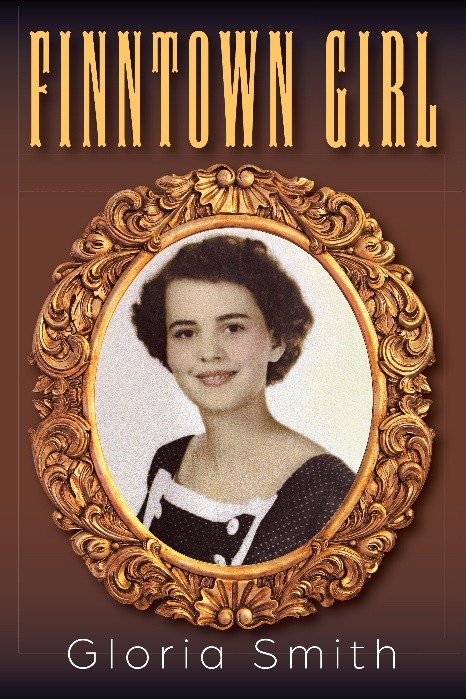
Book Showcase: Discover the Quiet Power of Finntown Girl by Gloria Smith


Gloria Smith’s Finntown Girl offers a poignant, character-driven glimpse into a little-known chapter of American history. Set in 1940s rural Georgia, this young adult novel explores the resilience of a Finnish-American girl named Helmi as she navigates cultural identity, silence, faith, and family hardship. With emotional depth and literary grace, Finntown Girl is a novel that stays with you—and it belongs on the shelf of every reader who appreciates coming-of-age stories grounded in both history and heart.

Here’s why Finntown Girl deserves a spot on your TBR list or your next book club discussion:

IF YOU LIKED THESE TOP 5 YA NOVELS, YOU’LL LIKE FINNTOWN GIRL

If you were moved by the heartfelt journeys in these emotionally resonant YA novels, you’ll likely connect with Helmi’s story in Finntown Girl. Gloria Smith’s debut brings together themes of identity, resilience, and quiet strength in the face of hardship:

  1. To Kill a Mockingbird by Harper Lee – Like Scout, Helmi offers a young perspective on injustice and family complexity.
  2. Out of the Dust by Karen Hesse – Both novels depict girls growing up in poverty-stricken, rural settings with lyrical sensitivity.
  3. The Book Thief by Markus Zusak – Readers who loved Liesel’s introspection and survival through silence will find a kindred spirit in Helmi.
  4. Brown Girl Dreaming by Jacqueline Woodson – Helmi, like Jacqueline, straddles two cultural identities with poise and reflection.
  5. Esperanza Rising by Pam Muñoz Ryan – A young girl navigating loss, change, and cultural dislocation connects these two stories.

If these titles are on your favorites shelf, Finntown Girl will be a powerful next read.

THE FINNTOWN GIRL PLAYLIST: SONGS TO SET THE SCENE

Looking to immerse yourself in the emotional tone and time period of Finntown Girl? These songs reflect the bittersweet beauty of Helmi’s 1940s Southern world—where hardship, hope and quiet strength intertwine:

  • “Dream a Little Dream of Me” – Doris Day
  • “Blueberry Hill” – Fats Domino
  • “In the Mood” – Glenn Miller
  • “Don’t Sit Under the Apple Tree” – The Andrews Sisters
  • “Ain’t Misbehavin'” – Fats Waller
  • “What a Wonderful World” – Louis Armstrong

Play these while reading for a fully atmospheric experience.

CHARACTER SPOTLIGHT: MEET HELMI

In Finntown Girl, we meet Helmi, a quiet, introspective Finnish-American girl growing up in the backwoods of Georgia during World War II. Her world is small but filled with challenges—family trauma, poverty, and cultural friction—yet Helmi’s internal strength is quietly transformative.

Like Francie Nolan in A Tree Grows in Brooklyn or Cassie Logan in Roll of Thunder, Hear My Cry, Helmi doesn’t set out to be a hero. But her authenticity, empathy, and quiet resilience make her one. Her story resonates deeply with readers who value richly developed characters and emotionally honest storytelling.

BOOK CLUB PICKS: IF YOU ENJOYED THESE, TRY FINNTOWN GIRL

If your book club enjoyed these five titles, consider Finntown Girl for your next discussion:

  1. Roll of Thunder, Hear My Cry by Mildred D. Taylor
  2. Between Shades of Gray by Ruta Sepetys
  3. Inside Out and Back Again by Thanhhà Lai
  4. The War That Saved My Life by Kimberly Brubaker Bradley
  5. A Tree Grows in Brooklyn by Betty Smith

Each of these novels—like Finntown Girl—offers a thoughtful look at a young girl’s journey to find her place in the world. Together, they provide rich terrain for discussion around courage, cultural identity, history, and hope.

5 THINGS THAT MAKE FINNTOWN GIRL A RICH CULTURAL EXPERIENCE

Finntown Girl is more than a coming-of-age novel—it’s also a layered, culturally rich portrait of a rarely depicted immigrant community in the American South. Here are five elements that give the book its historical and emotional depth:

  1. The sauna as sanctuary. A central part of Finnish life, the sauna represents more than hygiene—it’s spiritual, familial, and symbolic of cleansing and renewal.
  2. Bilingual identity. Helmi’s navigation between Finnish and English reflects the larger struggle of immigrant families to preserve heritage while assimilating.
  3. Lutheran grounding. Deep-rooted religious values shape many of Helmi’s actions and thoughts, from her understanding of forgiveness to her sense of duty.
  4. Silence as strength. Helmi’s reserved nature reflects a cultural tradition where emotional restraint is not weakness, but wisdom.
  5. Collective resilience. The tight-knit Finnish community in the novel demonstrates how mutual aid and shared values help families survive adversity.

These authentic details give Finntown Girl a distinctive voice in the YA historical fiction landscape.

Whether you’re a lover of quiet stories with big emotional impact, a fan of historical fiction, or a book club looking for your next deep discussion, Finntown Girl by Gloria Smith offers something special: a literary journey into a hidden corner of America’s past told through the brave eyes of a girl named Helmi.

Learn more or order your copy at Outskirts Press https://outskirtspress.com/finntowngirl

This content was enhanced through collaboration with AI-powered creativity applications.
Why Business people Need to Publish a Book

professionals benefit from having a published book
Most professionals benefit by having a published book

Certain professions need to be published. This list of professions can go on forever: entrepreneurs, doctors, lawyers, journalists, consultants, self-help experts, freelancers, and so on.

Even if you’re not on this list, read on to evaluate whether publishing a book is suitable for your profession. After all, publishing a book can contribute a lot to your career.

For the typical professional, it’s easier than ever to publish a book. Self-publishing and eBook publishing are both viable. You can release your book without waiting years for publication, keep control of your vision for your book, publish in both physical and digital formats, and retain a larger share of the loyalties.

In any profession, a book can serve as your best form of marketing, working better than any business card. A card can be easily thrown away, but a book can remain on your reader’s bookshelf forever.

Any reader who picks up your book becomes a prospective client, attracting attention and increasing your reach and visibility. Your book’s content can also testify to your authority, credibility, and professional expertise. On top of that, it extends your brand by giving you another avenue through which you express and practice your profession.

Finally, a reader-turned-client is more informed about your goods and services, improving the experience for all parties. Of course, any good professional can explain what she does, but having a book do the explaining is neat too.

For another example, take public speaking. If you speak for a living, you must have a book.

You can publish a book as the companion guide to everything you address on stage. It allows you to expand on topics you cannot discuss at length during your speech, and audience members who buy your book on the way out have another way of expanding on what they learned from your speech.

It’s also wise from the standpoint of marketing. Your speeches will promote your book, and your book, in turn, will open up more speaking gigs: a positive feedback loop.

A book can serve as the linchpin for your online content strategy. If you put in the work, you can increase the opportunity of your book snagging that blue-chip client, sparking word of mouth, or even garnering media attention, reaping a stream of new customers for you.

So, how do you sell your book after you publish it? First, consider giving your book a strong presence on LinkedIn. If you’re a professional, you’re likely already using LinkedIn, so why not get more mileage from a platform you’re already leveraging?

Your book gives you another reason to post regularly on LinkedIn, especially if you’re prone to leaving LinkedIn alone for months. To fuel your posting, you can repurpose content from your book as LinkedIn content. Alongside the standard post, LinkedIn has features to publish an article or create a newsletter. In addition, you can include a call to action to check out your book or begin a conversation with you in these various forms.

This also applies to other social media platforms. For example, you could tweet quotes and excerpts on Twitter. You can create short videos for Instagram or microposts for Facebook. You can even launch a blog or newsletter. The same platform may vary (as any of the previously mentioned platforms may not exist in a few years), but as a medium, the book will remain.

You can also bundle the book as part of your product, increasing its value for your customer. This is especially effective for digital products, where you can toss in an eBook at no extra cost. So while you may give up a potential sale, it’s a worthwhile trade if your primary product sells for significantly more than your book’s sale price.

Marketing aside, a book is another nifty format for your work, depending on your profession. If you’re a lawyer, you can teach the basics of law without having to sit a prospective client down. If you’re a consultant, a book can be a solid alternative for any client who’s unable to book an appointment with you. The possibilities are endless.

And above all, there’s always the chance that you will start writing a book and find publishing to be your calling. As beneficial as the promotional aspect of a book is, a book is also an opportunity to express your thoughts, work, and love of your craft.

Many professional authors start in different professions before making writing their full-time vocation. So now, don’t rush to quit your day job, but do know the act of writing can lead you down a rabbit hole of authoring.

No matter how you’d leverage a book, know there’s an exciting business world full of books. So will you write the next one?

Over to you: What are some of your favorite examples of professionals who’ve published books? How has your book served your career if you’re a professional who’s published a book?

What is the Maryland Library Ebook Law, and What It Means for Self-Publishing

In February, a federal court issued a preliminary injunction on a first-of-its-kind library eBook law, the Maryland Act, marking a momentary win for the plaintiffs, the Association of American Publishers (AAP).

The injunction follows a hearing where the AAP argued that the Maryland Act would’ve infringed upon publishers’ federal copyright protections, especially the exclusive rights publishers and authors hold under copyright law.

As reported by Publishers Weekly, the Maryland Act had required “that publishers offering eBooks to consumers in the state must also offer to license the works to public libraries on ‘reasonable terms.’”

In other words, if a publisher sold an eBook on Amazon or a similar store, then that publisher would’ve had to offer public libraries the opportunity to lend out electronic copies of their books, or else the publishers would’ve faced penalties, both civil and criminal. Currently, publishers have the discretion to not allow libraries to license their books electronically.

Despite the injunction, Maryland’s attorney general’s office plans to defend the Act in court. The Act was initially passed unanimously by the Maryland General Assembly in 2021 and went into effect on January 1, 2022.

The state argues that the Maryland Act is in the public’s interest, as it aims to support public libraries by addressing “the unfair and discriminatory trade practices of publishers at the expense of public libraries.”

The preliminary injunction signifies that the library eBook law may not stand. When determining if a preliminary injunction should be granted, a judge must evaluate four factors: “a likelihood of success on the merits; irreparable harm; winning the balance of equities; and that the injunction was in the public interest.”

As the court issued the injunction on behalf of the AAP, this suggests that the court likely deems that the law would’ve been harmful to publishers and that the AAP will likely succeed in getting the law struck down. Furthermore, the judge’s formal opinion states that the Maryland Act is probably a violation of federal copyright law.

The ramifications of this case will likely go beyond Maryland. As of late February, eight states have proposed bills similar to the Maryland Act, the latest being Connecticut. New York would’ve been the second state to put its own library eBook law into place if it weren’t for its governor’s veto. At the time, New York Governor Kathy Hochul expressed the AAP’s concern that the law would’ve violated federal copyright law.

So, what does this news mean for self-publishing authors? It depends on whether the law will survive court. As for now, the safest choice is to assume that the status quo will continue. Even if the Maryland Act doesn’t make it to the Supreme Court, a defeat in a lower court may deter other states from proposing and passing similar legislation.

It’s worth it for self-published authors to note that these laws are being proposed because large publishers have been stringent with making their books available electronically to libraries. For instance, Macmillan used to have an embargo on distributing eBooks to public libraries, a decision the publisher has since lifted.

Publishers also often demand high prices for licensing—which libraries find untenable—and they often refuse to negotiate licensing prices while imposing strict restrictions on lending.

Since big publishers license fewer eBooks and electronic copies to public libraries, self-publishers can benefit by seizing this gap. Self-published authors can license their books to public libraries through book distributors, the same services that allow authors to publish their books on multiple storefronts. Even with eBook formats, authors can still earn money when libraries obtain licenses.

On top of making their books available through lending services, self-published authors can also boost their discoverability by including bestselling books that are similar to their own in their book descriptions. This can work out to a small author’s benefit if the bestselling book isn’t available at the library, as the smaller book can still turn up in the library’s search results.

Separate from the legal merits of eBook library laws, large publishers seek to retain control of what eBooks they lend to libraries and how many. In this aspect, self-publishers can fill the gap left by these restrictions.

Amazon to Close Bookstores: What It Means for Indie Books

amazon paperback

Amazon started as an online bookseller. However, despite these roots, the e-commerce giant has decided for now to fold on their physical retail bookstore chain, Amazon Books.

As first reported by Reuters and later covered by Publishers Weekly, Amazon announced that it would close all 24 of its physical bookstores. The internet giant opened the first of these 24 bookstores in 2015, its premier location making its debut in Seattle. Over the next few years, Amazon opened Amazon Books shops in 12 states, Washington, D.C., and the United Kingdom.

Bookstores aren’t the only locations that Amazon is closing. The company is shuttering a total of 68 locations, which include the aforementioned bookstores, supermarkets, cashierless convenience stores, pop-ups, and locations within its Amazon 4-Star department store program.

Despite these closures, Amazon plans to shift laid-off workers and other resources to soon-to-open locations at its grocery store subsidiary, Amazon Fresh, as well as Amazon supermarket acquisition, Whole Foods.

The withdrawal from book retail is a telling admission of defeat for Amazon, as the company’s success had contributed to the destruction of many book retail stores, most notably Borders. Moreover, it’s yet another sign that success in the online space doesn’t automatically translate to physical retail, even for one of the world’s largest companies.

Who wins from Amazon Books’ loss?

Even as Amazon momentarily forfeits its efforts in the physical retail spaces, other parties will walk away as winners: independent bookstores and self-published authors.

Independent bookstores will benefit from Amazon’s retreat for several reasons. The most straightforward one is competition: while Amazon will continue competing with the indies with cutthroat low margins, broader selections, and fast Prime delivery, at least the e-commerce website won’t be butting heads with indies within the brick-and-mortar sphere.

This windfall is significant for independent bookstores at this point of the pandemic. With the omicron wave plummeting, even the most restrictive places in the US are seeking to lift the last of their COVID-19 precautions as consumers flock back to physical retail spaces. So while Amazon Books won’t close overnight, news of the program’s impending end will give its indie competitors an edge during an anticipated surge of in-person shopping.

Amazon Books’ failure also reflects well upon the strengths of independent bookstores. Amazon attempted to break into retail by leveraging Big Data, a wide selection, and even showcasing Amazon reviews.

However, none of Amazon’s online strength seems to replace the personal, local touch of independent bookstores. What independent bookstores lack in scope, they make up with depth, being more equipped to cater to their neighboring communities than an international chain like Amazon Books.

It may sound less intuitive why self-publishing authors may benefit from Amazon Books’ demise. After all, Amazon’s Kindle Direct Program has been integral to the careers of many self-published authors.

However, self-publishing authors share an advantage with independent bookstores in that indie authors have better access to independent bookstores than big retailers.

Amazon may help self-published authors better in the electronic space, where shelf space is limitless, and the cost of “stocking” an e-book is microscopic. However, this is a different story in brick-and-mortar stores, where major book chains only have so much room for books and usually only stock traditionally published titles.

Furthermore, self-published authors have more barriers to getting big retailers to give them the time of day. You can’t walk into a Barnes & Noble or an Amazon Books store and ask the owner if they can buy some of your copies to sell.

Independent bookstores are a whole other matter. As indie stores survive and thrive based on personal relationships, most are willing to talk with local authors. This opens up opportunities for both parties: you get the chance to have your self-published book sold on an actual bookstore shelf, and they get to show off their commitment to regional authors.

At an independent bookstore, a self-published author has the chance of being featured on a window display or front-door table, and indie bookstores are always looking for local authors to host book signings and other author events. None of this can be done with a big player like Amazon Books.

It’s unknown whether Amazon will reattempt physical bookselling in the future. But for now, the smaller players in the book industry have one less giant to worry about.

This image has an empty alt attribute; its file name is spa-news.jpg
As a self-publishing author, you may find it helpful to stay up-to-date on the trends and news related to the self-publishing industry. This will help you make informed decisions before, during and after the self-publishing process, which will lead to a greater self-publishing experience. To help you stay current on self-publishing topics, simply visit our blog each month to find out the hottest news. If you have other big news to share, please comment below.

How COVID has made self-publishing even more popular than before

How COVID has made self-publishing even more popular than before. Outskirts Press

Yes, the book industry, in general, is profiting from an explosion of sales. The sudden rise of homebound readers has led to them substituting outdoor activities with books. As a result, while other entertainment industries plummeted, the book industry has rebounded from the initial lockdown dip to levels higher than before!

Self-publishing authors, in particular, have thrived the last two years. The first round of pandemic lockdowns upheaved the job situation of many potential self-publishing writers. The circumstances of these writers varied. Some workers were laid off. Others left their jobs for health or family reasons. Many quit as part of “The Great Resignation.” Countless others remained at their jobs but shifted to a work-at-home environment and filled newfound time by taking up another pursuit, such as book writing.

No matter the reason, a number of aspiring authors faced change during COVID-19 and turned toward self-publishing as an even more desirable career path.

The self-publishing model endured when the pandemic forced most workers out of the office. The self-published author can write, edit, and publish a book—and never have to leave home!

For the self-publishing business, work-at-home is an ideal office. Thanks to modern communication, a self-publishing writer not only can make business calls from home but also engage in Zoom meetings. In the previous century, a manuscript sent by snail mail would’ve taken days, if not weeks. Now, you can also upload a manuscript to a book distribution service within seconds with email and file uploading. Readers can click the “buy” button on your book within minutes. You can even log on to the website of a print-on-demand (POD) distributor and list physical copies without having to negotiate a printing quote.

Work-from-home benefits even extend to the other professionals involved in self-publishing, like editors, proofreaders, and cover design artists. For example, one self-publishing author could assemble an entire team of collaborators that span worldwide without any member ever meeting in person!

The story looks different for the major, traditional publishers. When the pandemic lockdowns began, traditional publishers had to pivot hard to work-at-home. Some publishing houses have yet to return to the office almost two years later. A number of them still feel the pains of switching workplace settings after a decades-long tradition of office work. Other publishing houses had to bend corporate procedures to get work done.

The pandemic also hit the areas where big publishers had an advantage over indie publishers and self-publishers. Even with book sales rising, bookstore sales in 2020 were down compared to the year before because much of the sales surge was from online book sales. Tragically, many indie bookstores closed, like many small businesses that were shuttered by the pandemic.

And as we covered earlier in the blog, the supply chain’s congestion has slowed print book deliveries and frightened large publishers to delay new releases. The supply chain situation has grown only direr since then, with companies unable to ship customers their orders before Christmas. Of course, it doesn’t help that the unpredictability of COVID-19’s variants keeps brick-and-mortar stores on edge.

However, self-publishing authors have been able to fill in the gap left by undelivered physical books through the ebook format. Most self-published books are already digital. For many self-publishers, it was a matter of taking advantage of the rise in ebook sales, with digital sales spiking in 2020, and in 2021 remaining higher than the prepandemic.

Furthermore, the self-publishing author is more adept at adapting to work at home than an organization. As a business of one, a self-publisher can leap over the red tape, starting and finishing projects in months when the same title would take years for a traditional publisher to release.

A self-publishing writer also has some perks over traditionally published authors, such as higher royalty rates and instantaneous publication. Most appealingly, should you decide to go into self-publishing, YOU get to choose what story you create and put out in the world. You don’t have to wait to secure the validation of agents and editors when you can get on a computer and let the readers decide for themselves.

This appeal aligns with the main thrust of The Great Resignation: in the face of catastrophe, many workers have looked at their earlier jobs and decided that their dreams can no longer wait. No wonder lots of workers have decided to pursue their aspirational novel, autobiography, or self-help book by going into self-publishing.

It’s important to remember that for all the benefits self-publishing authors receive, we must still remember the losses from COVID-19. Beyond the closed bookstores and the two years spent indoors, the pandemic has taken a horrendous toll on lives and affected many more people’s health and livelihood.

But if you DO decide to take the plunge and self-publish your book, recognize that you are joining a movement that’s making the best of dire circumstances, sharing stories that will comfort readers during the pandemic, and will hopefully continue to do so post virus.