Reposting Royalene Doyle’s Conversation on FEED MIND, IMAGINATION, AND SPIRIT

There are few things in my life as special as walking the aisles of my local library. This is where book scents and muffled conversations create an environment that feeds my imagination and prepares my mind to function at peak performance. Here are the comfy chairs where I open book after book to explore research topics that support my clients—and my own writing projects. This is where I enjoy the unique whispered quiet that lifts my writer’s spirit and encourages me to get the job done—despite the tumult that circles the globe.

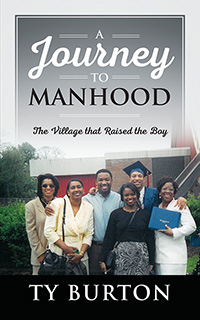
A Journey to Manhood
The Village t

Today, I focus on feeding the writers’ minds through reading nonfiction. I’m not talking about the chemistry or political science textbooks of the university kind, although they can be an excellent resource for mystery and science fiction writers. Today’s topic is the True Story genre—authentically written life events that offer perspectives for me (as a person and writer) and the characters I am developing in my work of fiction.

One such True Story is A JOURNEY TO MANHOOD: The Village that Raised the Boy by Ty Burton. This is Mr. Burton’s first book, written with passion, and acknowledges the value of teachers, coaches, mentors, and friends who step up to make a difference in someone else’s life. It lets readers understand “the high stakes that hang in the balance of every action we take.” Mr. Burton holds dual master’s degrees in Administration of Justice and Human Resource Development. Although he did the university work to obtain these degrees, reading his book reveals that much of his education came much earlier in life.


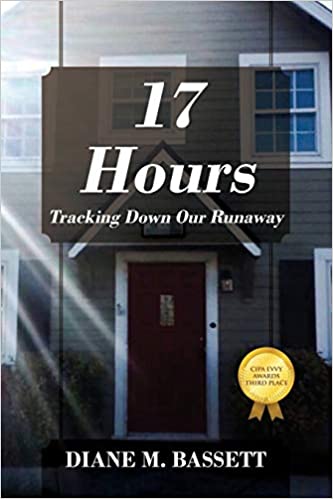
The second book I’ll mention is 17 HOURS: Tracking Down Our Runaway. This True Story is getting a lot of attention because of the “imminent threat” all young women must be aware of in the world we live in today. As the book cover states, “No family is immune to the dangers of sex trafficking.” The author, Diane Bassett, is one of many moms whose beautiful daughter had been drawn into a dark world operating in local parks, a world that pushes naive girls into such no-win positions. Bassett’s story details their 17-hour journey to save their daughter’s life. The book also places a Tip Guide in the hands of every reader with resources that will help locate a runaway child.

This nonfiction genre of True Stories holds many teachable moments for writers of every genre. Here are the key concepts I believe help us improve our skills as well as reader appreciation:

  • Before sitting down to write, prepare your mind to function at peak performance. If you need to set up your personal writing station in the library—or close your office door and relax with a cup of morning tea or coffee—then do it.
  • Write the story and the characters (real or imagined) with passion. Let the world hear their voices and feel their experiences as if you and each reader were experiencing them.
  • Keep your project (chapters) balanced. Nonfiction, real-life stories can be intense. Our reading audience today lives pretty intense lives themselves. However, learning about others who have survived is a valuable tool to encourage us all. So, balance the heart-pounding moments with lighter events—tender moments with family and friends—a pillow fight with other children, etc.
  • A major aspect of real-life stories is exposing the “imminent threats” that could very quickly impact our lives. These books can—and do—make a real difference, especially when helpful resource information is also provided. Keep a list as you do your research and consider adding it to the back of your book.

The last checkmark on this list is to GET THE JOB DONE! Your nonfiction, real-life True Stories need to be on library bookshelves, in bookstores, and online! This genre is a big part of what inspires future generations to step up and make their own “difference” in the world. So, don’t give up! Complete your book! Get it PUBLISHED!

ABOUT ROYALENE DOYLE: Royalene has been writing something since before kindergarten days and continues to love the process. Through her small business—DOYLE WRITING SERVICES—she brings more than 40 years of writing experience to authors who need “just a little assistance” with completing their projects. She developed these blogs for Outskirts Press (OP) a leading self-publisher, and occasionally accepts a ghostwriting project from one of their clients. Her recent book release (with OP) titled FIREPROOF PROVERBS, A Writer’s Study of Words, has received excellent reviews including several professional writer’s endorsements given on the book’s back cover.

Royalene’s writing experience grew through a wide variety of positions from Office Manager and Administrative Assistant to Teacher of Literature and Advanced Writing courses and editor/writer for an International Christian ministry. Her willingness to listen to struggling authors, learn their goals and expectations and discern their writing voice has brought many manuscripts into the published books arena. December 2017 marked the end of Royalene’s tenure at Self Publishing Advisor. and we will be spending the next few weeks celebrating some of her all-time hits, her most well-received articles for our blog, in thanks for years of generous service.

Beware the Internet Egg Basket: On Diversifying Your Social Media Presence

Recent events have reminded me of an adage: don’t put all your eggs in ONE basket.

This warning primarily applies to the social media and other online platforms we use in self-publishing. Here’s the thing: some websites decline in popularity, and some even disappear altogether.

MySpace used to be considered a worthy competitor to Facebook. These days, MySpace is lucky to be mentioned as Facebook forges deeper into the “metaverse.”

Old services such as Google+ and Vine used to bustle with many users. Sadly for their users and creators, these sites no longer exist.

Even the longest-running social media services may not endure as recommendable options. Who knows what direction Elon Musk may go with Twitter!

My point is: if you market your books only on one website, figuratively putting your eggs into the basket of that one platform, you risk your career dropping with the platform.

I know I harp all the time about how you must put yourself out there online if you want to advance your publishing career, so it’s doubly important that you don’t invest your efforts in only one platform.

Here are some considerations as you future-proof your marketing and publicity:

Diversify your platform

When businesspeople talk about “egg baskets,” it’s usually to exalt diversification. In most cases, it’s in the context of financial investment, but you can also invest in multiple platforms.

Return to your marketing plan—or if you don’t have one, write up several ideas for one. Consider the websites you use the most in promoting your book and the platforms where you want to expand. Write a few reasons you have questions you want to answer during your research and experience.

Then, aim to promote on at least two to three platforms during any particular week. I recommend focusing mainly on one (more on that below), but keep your accounts open on a couple of other platforms just in case your leading player becomes unviable.

Funnel readers toward platforms that you own

Here’s a scary thought: you don’t own your social media account. Sure, you have the password to your account, and you run your profile. But if the platform goes away, you’ll be left with nothing.

Having your account suspended or even banned is a common risk! It could be a mistake, but you could find yourself disconnected from most of your readers at a moment’s notice.

To mitigate this, build up platforms you have more “ownership” over. For instance, I recommend websites. First, buy a web hosting plan—and importantly, buy your own URL. Then once you build your website, back it up frequently to multiple locations.

While it requires money, paid hosting and domain services give you more ownership than most social media platforms, where you could be considered a virtual renter.

You’re much less likely to be kicked off their servers when paying for hosting. But if it happens, then you have a backup plan. You can switch hosts, move your domain, reupload your website, and be back in business, all at the same address.

In a similar vein, look into running a mailing list. Email has endured over the decades. You can also be equally flexible with mailing list providers, with the option of exporting your list of emails to another service when necessary.

In any case, use your social media platforms to “funnel” your readers toward these self-owned platforms. Not only will your readers stay more in the loop about your publishing, but they’ll also be further invested in your career.

But don’t overcorrect with TOO many baskets

Don’t stretch yourself thin by using too many platforms.

Whenever we see news of another platform declining or dying, it’s tempting to join up with all its competitors. With the announcement of Elon Musk buying Twitter, many users tweeted to their followers that they were moving to Discord, Tumblr, their new mailing list, TikTok . . .

But the ephemerality of platforms doesn’t preclude the dangers of burning yourself out.

If you find your favorite service a sinking ship, don’t decide your next destination out of panic. Instead, do the research, pick one or two other alternatives, and maintain your self-owned platforms like your website and mailing list. And keep in mind you can prioritize your accounts differently yet adjust your usage based on how each platform rises and falls.

In the end, it comes down less to the state of any particular basket (or platform) but rather the skills you build and transfer throughout your publishing career that will serve you the best.

Maybe we can create another expression: don’t put your eggs in TOO many baskets.

I’ll let you workshop that one . . .

Over To You: How do you diversify your internet presence? What precautions have you taken just in case one of your main platforms collapses?

Elizabeth Javor Outskirts Press

ABOUT ELIZABETH JAVOR: With over 20 years of experience in sales and management, Elizabeth Javor works as the Director of Sales and Marketing for Outskirts Press. The Sales and Marketing departments are composed of knowledgeable publishing consultants, customer service reps and book marketing specialists; together, they all focus on educating authors on the self-publishing process to help them publish the book of their dreams. Whether you are a professional looking to take your career to the next level with platform-driven non-fiction or a novelist seeking fame, fortune, and/or personal fulfillment, Elizabeth Javor can put you on the right path.
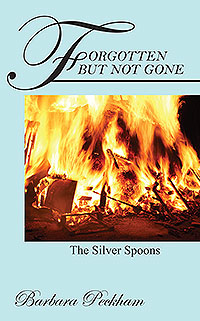
Reposting Original Book Review: “Forgotten But Not Gone” by Barbara Peckham

Forgotten But Not Gone by Barbara Peckham

OFFICIAL DESCRIPTION*:

Forgotten But Not Gone is an interwoven story about a married housewife and part-time librarian living in coastal Massachusetts in 1965. She is happy and very active in her life there. However, she has a background that no one knows about except her husband, George, and even he doesn’t know anywhere near the whole story. He knows she has amnesia about her early childhood but very little else.

All Liz really remembers is that, at the age of about fourteen or fifteen, she found herself running, panicked, down an Appalachian mountainside. She had no idea then, nor did she now have any memory of what had happened before that, what she was running from, or what had frightened her so much. So now she seldom thought about it. She had managed to get on with her life and what was past was past.

That is, until a strange letter arrives in her mailbox one day. It appears someone knows things about her that she doesn’t even know, and it frightens her. Not long after, other occurrences begin, and they escalate more and more in intensity and danger. She is sure all this has to do with the past she can’t remember, and she begins to fear for her life. Ever since she can remember, she has had some silver teaspoons with initials engraved on them and a diamond ring, but she has no idea whose they were or what the initials mean. Did she steal them? Is someone finally going to find her? Then a teaspoon exactly like hers turns up in a friend’s collection. Where did she get it? How are they connected?

Still, try as she might, all she can remember is that she ran until she came across a hardscrabble farm, where an elderly couple took her in. They treated her like the daughter they had lost. She stayed and worked the farm with them until, after a few years, they died, one shortly after the other, and she was forced to leave the only home she remembered to go out on her own with few resources and little education. The years following were years of hard work and night school.

The story weaves back and forth between the present, [with] Liz revealing more of her past, a mysterious man who has come to town with a vengeance, and a young woman who has in her possession another of the silver spoons. All comes together with a terrible fire at the end, and the truth finally comes out.

REVIEW:

Once upon a time, a girl stumbled out of the thickly forested Appalachian foothills and into the lives of an elderly couple on a small farm. Uncertain of what had happened before she entered the forest, her exact age, and even her own name, the girl is dubbed “Nell” and nurtured by the Ekburgs until their deaths send her out into the world, ready to make a new life for herself under a new name, and equally determined to make new memories to replace the ones she’d lost.

Thus begins the story of Forgotten But Not Gone: The Silver Spoons, a new cross-genre historical fiction plus mystery novel from Barbara Peckham. The novel leaps twenty-odd years into the future and catches up with Nell, now Mrs. Elizabeth (“Liz”) Everson, who lives a calm life as a part-time librarian and housewife just before Halloween in 1965. And yes, a set of silver spoons really does connect the dots between the stories of Nell/Liz/? and those of the book’s other point-of-view characters, including her husband George, the young Joyce, Liz’s new friend Elaine, the local police chief, and an unnamed mystery man who thinks he knows exactly what happened during Liz’s forgotten years––and is determined to punish her for it.

Told in a combination of straightforward narrative and flashbacks from their prior lives, Forgotten But Not Gone: The Silver Spoons perfectly melds those elements it borrows from historical fiction and cozy mystery genres. Peckham has an eye for detail, walking her readers back through the years to a time when phones were analog and had those spiral cords (you still can find them for sale as “antiques” on Etsy, which makes me feel absolutely ancient), and when people sent letters that were made of actual paper. She also embraces all the pomp and circumstance (and obsessive planning) behind many a community celebration of the variety still common in older, tourist-friendly East Coast shore towns. As a librarian, Liz enlists Elaine and her other Book Club friends to assist in organizing Seaside’s Christmas parade and neighborhood gathering––a subplot that is blessedly free of the sinister elements that are becoming routine in the Everson household suddenly. It is here, with her friends around her and a project to complete, that Liz’s fundamental personality really shines––and her natural aptitude for winning people over. It’s only when Liz returns home that she is haunted by danger and the nagging feeling that someone is out to get her for things she can’t even remember begins to sink its claws into her mind.

So, what happened in those years she’s forgotten? I can’t tell you exactly since to do so would be an unforgivable spoiler. Still, Peckham weaves together the various elements of the novel into one cohesive and compelling story of fractured and found families, suspense and seeking sanctuary, and the making of a whole and complete life.

At a time when the world seems to be either on fire or consumed by some other tragic breaking news, Peckham invokes an era when the local police were also neighbors and friends, when daily life felt comfortable like a favorite sweater, and when libraries were the surest place to discover critical information in a mystery so old the trail is beyond cold––it’s pure ice. And I find this somewhat ironic, given that fire and ice (or at least, icing bruises) are common themes in Forgotten But Not Gone: The Silver Spoons. I heartily encourage you to take a peek at this novel if you liked Big Little Lies but wished that people would just talk to each other and figure out a solution together, or if you find yourself hankering for a seasonally appropriate read in the months between Halloween and Christmas. After all, we all need a satisfying spook every now and then.

IN SUMMARY:

Compassionately written characters learn crucial details about their own lives in this cozy, genre-bending novel from Barbara Peckman. Forgotten But Not Gone: The Silver Spoons is precisely the right book at the right time for those of us who love old houses and old towns and old memories relived.

WHERE TO BUY?

Find out more about the book Forgotten But Not Gone: The Silver Spoons on the Outskirts Press author page.

I received a copy of this book in exchange for an honest review. 

* Courtesy of Amazon book listing.


SONY DSC

ABOUT KENDRA M.: With nine years in library service, six years of working within the self-publishing world, as well as extensive experience in creative writing, freelance online content creation, and podcast editing, Kendra seeks to amplify the voices of those who need and deserve most to be heard.

Why You Should Have Your Book in Multiple Formats

Even with technological advances, I still love the feel of a physical book.

Whether paperback or hardcover, I love to cozy up on the couch with paper and ink in my hands. But even with my preferences, I’d still advise that it’s a wise business decision for self-publishing authors to sell books in multiple formats.

Despite apocalyptic predictions that digital will kill paper, the physical book isn’t going away. On the contrary, paperback books remain the most popular format. That said, it’s unwise to self-publish your book in only one format.

Readers love choice more than ever, and that love of choice includes book formats: physical books, eBooks, and audiobooks.

Here are several reasons why you should publish your book in multiple formats.

Some formats work better than others for specific markets.

If you’re a romance novelist and self-publish your book only in paperback, you’re more likely to fail. Why? Many romance readers prefer eBooks over paperback, so you’re leaving sales on the table if you’re not getting your stories digital.

Conversely, children’s books fare better in paper formats, so a children’s book in only eBook form may not be enough. Format preferences vary wildly on genre and category, so you’ll glean a wealth of market research by investigating the format most of your potential readers are buying.

But even when one format is more popular than another, it’s wise to publish in multiple formats. Related to the above, many romance readers still prefer paper to electronic—airport stands for romance novels still exist! So, multiple options are crucial to reaching your potential audience.

You increase the number of platforms you can sell your book on.

Not every bookseller sells books in every format. If you self-publish your book only in the .mobi eBook format, you’re practically limited to selling through Amazon’s Kindle section.

While Amazon is the most prominent storefront for self-publishing authors, you can do better.

If you take your manuscript’s file and export it to .epub, you open up most of the rest of the eBook market. You make it possible to sell your book on Barnes & Noble, Apple Books, Kobo, Google Play, and more. Some retailers even sell books in .pdf form.

If you record your book as an audiobook, you can play it in audiobook storefronts, such as Audible, iTunes, Google Audiobooks, Nook Audiobooks, or Kobo Audiobooks.

And if you release your book in physical form? You can sell on most of the above retailers, like Amazon, and even keep open the chance to see your book at a physical bookstore. Sounds exciting, right?

You can get the best of both worlds with exclusivity and availability.

Some retailers offer the option to sell your book exclusively on their storefront. In exchange, you’ll often get better royalties and priority in promotions and algorithmic placement. The downside is that exclusivity commits you to only one storefront. So, if you sign up for Amazon’s KDP Select, you can’t also sell your eBook with Barnes & Noble.

However, exclusivity deals usually only apply to one format. So, you could decide to give KDP Select eBook exclusivity but then sell your book in physical and audiobook format elsewhere. You can mix and match exclusivity deals and benefit from the perks of exclusivity and the availability of multiple formats.

You increase your book’s accessibility.

Not all book readers can read a physical book. For example, some readers are visually impaired. Other accessibility considerations include learning disabilities such as dyslexia, limits in motor skills, and language ability.

Fortunately, a self-publishing author has all the tools to make an accessible book. Audiobooks are an excellent alternative for accessibility. Of course, eBooks are also beneficial in their adaptability. With an e-reader, a reader can increase the text size, change the font, look up dictionary definitions, or even enable text-to-speech.

But when formatting eBooks, you must follow accessibility guidelines. E-readers need a properly formatted file to parse text for the user. When you format your book with accessibility, your product looks more professional, and more readers can enjoy your work.

Bonus Reason: For another kind of accessibility, you can get your self-published books into libraries. This is especially easy with digital formats, and you can use book distribution services to list your book on digital lending services like OverDrive and Hoopla. In addition, the libraries that you license your book to will financially compensate you without the reader having to pay.

You can even sell readers the same book more than once in different formats

A number of retailers make it enticing to buy in two or more formats. For some Kindle eBooks, Amazon offers the option to “add Audible narration,” often at a discount. Through Whispersync technology, readers can switch between visual reading and audiobook reading without losing their place.

You can even set it up so that if a reader buys the physical version, the reader can also buy the eBook version for cheaper or even get it for free. This bundling technique significantly increases goodwill with your readers and entices them to buy your next book.

Closing

The case is strong: Multiple book formats are great for your self-publishing business and the culture of reading. Prepare your manuscript with different formats, and you’ll be a step closer to success!

I’ll turn it over to you: What book formats do you prefer? What factors influence the format you get your books in?


How to Get Started Selling Books on Social Media

No matter what path you take to publishing your book, you’ll need to learn how to sell books on social media.

If you go the self-publishing route, social media will be one of your most accessible platforms for selling and connecting. And even if you go the traditional route and submit your book to a publishing company, publishers are looking for authors who are comfortable enough to run their online presence. Unfortunately, Luddites don’t get signed in publishing.

It’s hard figuring out how to build your social media platform to the point that you can sell copies. A social media account isn’t something you can set up once and leave alone; instead, you must work to build an organic following and earn the algorithm’s favor.

As overwhelming as social media can feel, one upside is that there are numerous ways to approach social media marketing. It’ll depend on your brand and your plan to present the best parts of yourself professionally.

I’ll go over the considerations to keep in mind as you build your social media platform; then I’ll cover what you need to get started putting your book out there and getting it to readers.

Building a platform brick-by-brick

Here’s something to keep in mind: not all followers are equal. However, there are services available where you can “buy” followers, and you can get caught up in following everyone under the sun who’s willing to follow you back.

Don’t inflate your following count! At best, you’ll waste time and money on thousands of fake followers who will never buy your book. At worst, you’ll get banned for buying or even soliciting counterfeit followers.

So, as you’re building up your accounts, don’t get distracted by metrics for metrics’ sake. Instead, focus on organic growth. Follow accounts that you’re genuinely interested in engaging, whether reading their posts or keeping a conversation going.

At first, you’ll likely find that most of your followers are fellow authors and maybe other publishing professionals such as agents and editors. This is okay. Networking is gold, and social media is an excellent way to find agents soliciting books like yours or meeting writers you might collaborate with on publicity campaigns.

Just remember to also reach beyond the publishing bubble and seek out readers.

Ideas for selling your book

The most obvious tactic is the cold sell: find the account of a potential reader and pitch them your book.

The cold sell can be effective in cases where your book is the exact title the prospective buyer is looking for, especially if the prospective has asked for recommendations. Just be reasonable with cold selling. If you self-promote your book to everyone you encounter, your account may be shut down for spamming.

So, how else are you supposed to sell your book? Here’s a list of other techniques that may appeal to prospective readers more.

  1. Write about your book. Either make a post (on sites like Facebook) or a thread (on Twitter) explaining to readers what your book is and why they should read it. This is an excellent opportunity to repurpose your blurb material from your book’s description copy.
  2. Post excerpts. Isolate the juiciest quotes and passages from your manuscript, and either post them as text or screenshots; make sure that your screenshots have alt-text for accessibility.
  3. Provide relevant visuals. Curate a collection of photos of your book, along with visuals that fit the book’s mood. Instagram is home to “Bookstagram,” which is a great place for these kinds of pictures. You can also create boards on Pinterest, whether your book’s plot or characters inspire it.
  4. Shoot some videos. Unless you sink money into this, your production value will be low, so you may be better off leaning into vlogging, or video blogging. Almost every major platform has video, but videos have especially been catching fire on TikTok, home of “BookTok,” where snappy pitches of books do well in reaching new readers.
  5. Hold giveaways! Free stuff can rope in new readers and endear you to your first fans. Of course, physical copies entice the most avid readers, but eBooks are also a great option on a budget. You can even order “swag” that’s themed for your book.
  6. Share other people’s content. This will garner attention from the people that you’re sharing. If a reader posts praise, make their day by thanking them and giving their praise a boost. Keep your brand in mind when resharing content unrelated to your book; posting about your book’s genre or subject matter makes for good material.
  7. Buy social media ads. If you go this route, do the research, as advertising is a high-risk/high-reward endeavor. Ads work great once you know a platform enough to recognize what ads perform best on it and whether it’s worth buying impressions.
  8. Mix and match all the above! Variety will add spice to your book promotion and create multiple entry points for getting the sell.

Now, this is only the beginning of online bookselling. As you work on your author career, you’ll find what works best for you.

In that light, my parting advice is to go out there and put your plan in action. I look forward to seeing your book the next time I peruse my timeline.

Over To You: How do you use social media to sell books? What success stories do you have, and what questions do you still have?

Elizabeth Javor Outskirts Press

ABOUT ELIZABETH JAVOR: With over 20 years of experience in sales and management, Elizabeth Javor works as the Director of Sales and Marketing for Outskirts Press. The Sales and Marketing departments are composed of knowledgeable publishing consultants, customer service reps and book marketing specialists; together, they all focus on educating authors on the self-publishing process to help them publish the book of their dreams. Whether you are a professional looking to take your career to the next level with platform-driven non-fiction or a novelist seeking fame, fortune, and/or personal fulfillment, Elizabeth Javor can put you on the right path.