Weekly Self-Published Book Review: Side Effects

Book reviews are a great way for self-publishing authors to gain exposure. After all, how can someone buy your book if he or she doesn’t know it exists? Paired with other elements of your book promotion strategy, requesting reviews is a great way to get people talking about what you’ve written.

When we read good reviews, we definitely like to share them. It gives the author a few (permanent) moments of fame and allows us to let the community know about a great book. Here’s this week’s book review by Midwest Book Review:

side effects

Side Effects

Timothy G. Sheridan

Publisher: Outskirts Press

ISBN: 9781432767266

Reviewed by Diane Lunsford

“Side Effects” by Timothy G. Sheridan is a mere 102 pages, yet it took me nearly five days to read — not because it was poorly written,  rather its content is riveting.
Sheridan begins his story by describing himself as a troubled, abused kid when he signed up for the Vietnam war. He explains a lot of his motivation in signing on was to right the death of his brother in the same war that took him away forever. What he didn’t know was that while he entered the situation as an angry kid, he would return a broken and haunted man. Sheridan’s raw and telling accounts of actual experiences while in Vietnam are touched upon lightly. The story primarily focuses on his journey upon returning home — home being the Psych Ward of a VA (Veteran’s Administration) hospital located in San Francisco, California.
Sheridan leads the reader through wretched stories of people and the aftermath of the hellish war that lived on in their heads long past Vietnam. He paints the picture of his egregious drug addiction that began in “Nam” and in the back alleys of Saigon and opium dens, only to be reinforced and replaced with prescribed Lithium, Thorazine and whatever other mind-numbing fix available once deposited in the VA. He welcomed the medications in an effort to erase his memories and certainly in the spirit of killing the demons that had captured his mind. He wanted to remember the young soldier who entered the war at the same time repair the broken man he had become upon his return.
What was most engaging, however, is how Sheridan managed to strike a chord of balance as he described accounts and experiences of the many patients (and friends) he met while walking down the road of his own recovery. His periodic and light-hearted infusions of “it is what it is” laissez faire provided the reader some comfort to read on. Yet, on the next page, he would swing his pendulum pen and place strong and direct dialogue about the frenzied mess of the minds (including his own) he encountered. He writes of the schizophrenic torment and delusions of John/Floyd’s multiple personas only to sum up the outcome again, by holding onto the reality that while it may only be in his mind and he is home, the war will always be a part of all of them. It is when Sheridan’s friend Bill imparts a deep-seated and meaningful message to him that the reader gains a sense of strength to continue forward with the final pages of this book— Sheridan’s story.
I have great respect for the way Sheridan delivered his story onto paper. There is an unwritten insistence from beginning to end that he is not a victim, rather he is a survivor. Is the writing a Pulitzer contender? I don’t have the answer to this. Is the story compelling? Absolutely, and it is because of this I would recommend “Side Effects.” I believe it is a story that Timothy G. Sheridan not only needed to tell, but share. As a reader (and writer), sometimes this is why a book is destined to be published.

Weekly Self-Published Book Review: Satan Thinks in Black & White: Racism in the Congregations of America

Book reviews are a great way for self-publishing authors to gain exposure. After all, how can someone buy your book if he or she doesn’t know it exists? Paired with other elements of your book promotion strategy, requesting reviews is a great way to get people talking about what you’ve written.

When we read good reviews, we definitely like to share them. It gives the author a few (permanent) moments of fame and allows us to let the community know about a great book. Here’s this week’s book review by Midwest Book Review:

Satan Thinks in Black & White

Satan Thinks in Black & White: Racism in the Congregations of America

Ronald B. Jimmerson

Publisher: Outskirts Press

ISBN: 9781432782467

Reviewed by Carol Hoyer

In “Satan Thinks in Black & White,” author Ronald B. Jimmerson takes readers on a thought-provoking journey on how we as a society have incorporated racism into our church congregations. His thoughts relate back to God’s original plan of having one church, one Spirit and one body. At the beginning of the book he relates, “We have allowed Satan to divide Christianity into denominations, and denominations into race, and race into hatred, and hatred in segregation.”
Another thought he provides is that we have gotten away from the spirit and look to the flesh for guidance. We believe what pastors tell us even though they are misusing the Bible to support their beliefs. Many do not even open their Bibles until Sunday and do not praise God for everyday things. Jimmerson also believes that we have become a very disgruntled society which is distrustful of people we don’t understand.
In Chapter 2, the author discusses how many feel unwelcome when they are looking for a church or when visiting other churches that are of a different denomination. Many individuals carry prejudice in their hearts although verbally they may say something different. Chapter 3 discusses the different types of Christians and Jimmerson states that everyone is one of the types and may not know it or is in denial. There is one chapter on slavery which is written to provide some additional history on how Satan deceives people to divide and indoctrinate society. Even though slavery is illegal, as a society we still feel the impact of it.
“Satan Thinks in Black & White” by Ronald B. Jimmerson was quite a thought-provoking book, well written and informative. There might be some who read this book who will get angry and incensed at what the author states; however, maybe they are the ones who need to address some of their false beliefs.

Weekly Self-Published Book Review: Ashes Ashes the Twins Fall Down: Twin Towers, 9/11

Book reviews are a great way for self-publishing authors to gain exposure. After all, how can someone buy your book if he or she doesn’t know it exists? Paired with other elements of your book promotion strategy, requesting reviews is a great way to get people talking about what you’ve written.

When we read good reviews, we definitely like to share them. It gives the author a few (permanent) moments of fame and allows us to let the community know about a great book. Here’s this week’s book review by Midwest Book Review:

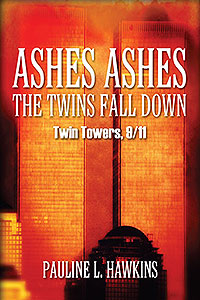
ashes ashes

Ashes Ashes the Twins Fall Down: Twin Towers, 9/11

Pauline L. Hawkins

Publisher: Outskirts Press

ISBN:9780578105307

“Ashes Ashes the Twins Fall Down: Twin Towers, 9/11” is a biography/autobiography written by Pauline L. Hawkins. While it was a quick read for me, it is the reflection of its premise that inspires me to review it the way I have chosen to do so.

To set the tone, dynamics and intent of her story, Hawkins begins with the diversity between two cataclysmic questions in our society, one commonly asked before 9/11: “Do you remember where you were when J.F.K. was shot?” and the one asked post 9/11: “Do you remember where you were when you heard about the attacks on 9/11?” By beginning with this analogy, she has solidified where she intends to navigate her book and immediately connects the reader with the premise and the connection with its title.
Once Hawkins sets her foundation, she ramps her account of how 9/11 affected (and changed) her life forever more going forward. Given this is an auto and biographical account, Hawkins is keen on asserting her emotions as to how the tragedy changed the course and direction of her life, beginning with her dilemma of how she will position the explanation to her then, nine-year-old son, Cody. She is also cognitive and aware of her audience and manages to impose factual accounts intermittently among personal experience.
As the story unfolds, she expresses her growth and understanding through her experience of the event by explaining the awareness and responsibility she imposed upon herself to become an informed American citizen after 9/11. She paints the dichotomy of her naïveté prior to and the necessity to reach beyond naïveté and become an informed citizen by paying attention to news accounts, enlightenment of governmental affairs and interactions, to name a few. She embarks upon a self-education mission, particularly with some of the congressional acts and practices that were put in place (i.e., the Patriot Act) in the aftermath. She devotes an entire chapter to not only the ten components that make up the ACT but also what they mean to her as an American citizen and how they affect her life. Cautious in the pontification of her personal opinion, there are subtle nuances exposed toward her personal discourse with some of the specifics. However, she does not burden the reader with endless, page-turning “ranting.”

For a first novel, “Ashes Ashes the Twins Fall Down: Twin Towers, 9/11,” I believe Pauline L. Hawkins has done a decent job of delivering her story. There is a certain element of healing comfort when she enlightens the reader toward the five facets of the grieving process and how she has managed to substantially address all but makes the confession of her own struggles still on certain levels. Perhaps this was part of the intended delivery. I also think she has done the reader justice by striking a genuine level of compassion through her word placement. However, it is difficult to know if this is the one book many will flock to on this particular subject. I believe the tragedy of 9/11 is a subject that is beyond challenging to write about (and capture the raw essence) through one set of circumstances (or opinions) in order to truly encapsulate the entire meaning. It has impacted the lives of every American in one way or another, particularly for those of us (including Ms. Hawkins) who have lived through it in order to share our experiences in its aftermath. I do stand firm on giving Ms. Hawkins props for taking on such a challenge. I think she made a strong appearance in sharing her perceptions and research.

Weekly Self-Published Book Review: After the Falls

Book reviews are a great way for self-publishing authors to gain exposure. After all, how can someone buy your book if he or she doesn’t know it exists? Paired with other elements of your book promotion strategy, requesting reviews is a great way to get people talking about what you’ve written.

When we read good reviews, we definitely like to share them. It gives the author a few (permanent) moments of fame and allows us to let the community know about a great book. Here’s this week’s book review by Midwest Book Review:

After the Falls

Brad Anderson

Publisher: Outskirts Press

ISBN: 9781432771829

Treasure comes with the challenge of keeping it. “After the Falls” follows Patrick Kingrea as he tries to manage his stolen gemstones as he hikes through the Grand Canyon. A follow up to Brad Anderson’s previous novel “Ribbon Falls,” it follows the continuing adventures of the jewel heist as Patrick races against an enemy he can’t identify. “After the Falls” is a fast paced and much recommended read for thriller fans.

Weekly Self-Published Book Review: Bad Seed

Book reviews are a great way for self-publishing authors to gain exposure. After all, how can someone buy your book if he or she doesn’t know it exists? Paired with other elements of your book promotion strategy, requesting reviews is a great way to get people talking about what you’ve written.

When we read good reviews, we definitely like to share them. It gives the author a few (permanent) moments of fame and allows us to let the community know about a great book. Here’s this week’s book review by Midwest Book Review:

bad seed

Bad Seed

Eric McCuller

Publisher: Outskirts Press

ISBN: 9780578088457

Somehow through it all, we try to put together our lives. “Bad Seed” is the autobiography of Eric McCuller as he tells his story of clawing his way up through life and trying to gain an understanding of a world that isn’t fair and getting through harsh life, prisons, and the hunt for something that is worth living for. For those searching for an autobiography of clawing up through the streets, “Bad Seed” may very well be worth considering.