Weekly Self-Published Book Review: Deliverance from Satanic Bondage

Book reviews are a great way for self-publishing authors to gain exposure. After all, how can someone buy your book if he or she doesn’t know it exists? Paired with other elements of your book promotion strategy, requesting reviews is a great way to get people talking about what you’ve written.

When we read good reviews, we definitely like to share them. It gives the author a few (permanent) moments of fame and allows us to let the community know about a great book. Here’s this week’s book review by Midwest Book Review:

9781432756024

Deliverance from Satanic Bondage

Michael Richardson D. D.

Publisher: Outskirts Press

ISBN: 9781432756024


“Deliverance from Satanic Bondage” is a powerful and positive testimony of Dr. Michael Richardson’s deliverance from Demonic and Satanic bondage salvation through the atonement provided by Jesus Christ and the power of the Holy Spirit. Richardson tells of his early family life, of battles with demons, the spirit of homosexuality, the curse of drugs, thoughts of suicide, and the experience of depression.

Once released from this demonic bondage, Dr. Richardson has gone on to earn graduate degrees in evangelism, theology, Christian education, and counseling. He now ministers in a deliverance ministry and is assistant dean at the Lie International Bible College in New York City. He relates his experiences in this book to give encouragement and instruction to anyone working their way though similar experiences.

In the chapter dedicated to specific exposure of Heresies, False Teaching, and Erroneous Doctrines, Dr. Richardson has carefully cataloged, described, and warned of the fallacies taught in organizations proclaiming themselves to represent truth or the true church. The information included is of particular value because it alerts the reader to be on watch for both general and specific erroneous teachings. If or when you are faced with any one of these false teachings, you can do more in-depth research at your local library or through a web-site on-line.

In another chapter the same approach is used to warn of the danger of satanic cults and their practices, many of which seem innocent at first glance but tend to blind, confuse, and bind the naive to their dangers.

Richardson’s writing is direct, candid, and sincere. It is foundational in a study of the influence of cults, false religions, as well as the decline in moral social and religious standards practiced in contemporary culture.

I received a complimentary copy of this book from author’s representative. The opinions I have expressed are my own. I am disclosing this in accordance with the Federal Trade Commission’s guidelines.
Weekly Self-Published Book Review: The Art of the Roman Catacombs

Book reviews are a great way for self-publishing authors to gain exposure. After all, how can someone buy your book if he or she doesn’t know it exists? Paired with other elements of your book promotion strategy, requesting reviews is a great way to get people talking about what you’ve written.

When we read good reviews, we definitely like to share them. It gives the author a few (permanent) moments of fame and allows us to let the community know about a great book. Here’s this week’s book review by Midwest Book Review:

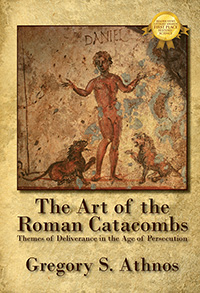
The Art of the Roman Catacombs: Themes of Deliverance in the Age of Persecution

Gregory S. Athnos

Publisher: Outskirts Press

ISBN: 9781432774493

Reviewer: Vicki Liston


One would think that by reading a book about the art that adorns the Roman catacombs, one would purely concentrate on analyzing the style and technique of the ancient artists. However, author Gregory S. Athnos presents his thoughts on the subject from a unique and fascinating angle. “The Art of the Roman Catacombs: Themes of Deliverance in the Age of Persecution” is not your typical Sunday school lecture.

“The Art of the Roman Catacombs” is an amazing journey into the subterranean world of early Christian tomb frescos. While Athnos does make distinction between the rudimentary plaster scratchings and the sarcophagi carvings, he focuses mostly on the main themes of the artwork and how they differ from our current day Christian emphasis. Specifically, we tend to center our minds on the sacrifice – the crucifixion of Jesus Christ – when practicing Christianity. Athnos shows, through example after surprising example, that early Christians didn’t include crosses or any references to sacrifice or death in their art. Instead, they emphasize the resurrection and the newfound power over death. The messages they left were of hope, of deliverance, and of eternal life.

I found the first appendix at the end of the book to be especially interesting. Athnos uses recorded astrological events, historical data, and seasonal information to pinpoint Jesus’ birthday … and it’s not what you think. I grew up believing what he explains although I only had the “shepherds couldn’t have been out in the fields at night in December” reasoning. Athnos not only presents this appendix with ample information to back up his theory but can even utilize the catacomb art to further justify it. I was simply blown away.

Athnos writes with an authoritative tone, speaking with intelligence and eloquence. His style is straightforward and organized, which gives the book a sense of direction and flow. He also succeeds in imparting his enthusiasm on the subject to his readers. Overall, I found his novel way of interpreting the tomb art to be absolutely captivating. I think this would be a fantastic book for not only Bible historians but for small group Bible studies. Further, tourists looking to explore the catacombs would enjoy reading the book before visiting; I know I would have loved to have this before my travels there. It truly gives a fresh perspective on traditional Christianity.

“The Art of the Roman Catacombs” represents a thirst for greater knowledge, empathy for those early Christians living during the Age of Persecution, and a hope that those reading will have a better understanding of what the emphasis was in the religion’s beginnings.