Self-Publishing Authors Can Get Their Books on the Shelves of “Traditional” Bookstores

Even with the recent changes in the book publishing industry, a “traditional” bookstore presence should still be a goal for authors who want this. Why? Well, with this presence, authors are able to target an audience that is passionate about books. Think about it — people have to leave behind the comforts of their own home to go into a bookstore. Most likely they are there to purchase a book. If your book is on the shelf, yours may just have a chance at being the book they buy.

How can you work toward getting your book into that bookstore, though? Is it a matter of luck? Can self-publishing authors make the cut? The good news is that even if you’re not necessarily on a “lucky streak”, it’s still possible to successfully target placement in “traditional” bookstores. However, you must have a solid plan in place for doing so. Here are a few action items to put on your list as you get started:

  • Make sure your book is fully returnable. If your book cannot be returned, there is great risk involved for the bookstore. For example, if they stock 10 copies of your book and only 4 sell over the course of a year, they are losing money. If the book is returnable, though, the store can simply send the book back that doesn’t sell. Think of this return-ability as a type of “insurance” for your book.
  • Offer a sufficient trade discount. What’s sufficient? Typically that will be around 50-55% (or higher). Of course this does cut into your profits, but a higher retail margin gives the bookstore more incentive to stock your book on their shelves. No incentive? No cigar.
  • Build proof that your book is desirable. This is probably the most difficult (though not insurmountable) part of it all because authors often have a bias view of their book. However, the best indicator of a desirable book is exponential sales figures. If the amount of books you sale doubles, triples, quadruples, etc. month-after-month, that is something that can work in your favor. If you aren’t a professional marketer, you may want to seek the services of a book marketing consultant. Make sure they are able to help you draft a marketing plan and go forth on planning your publicity.

After you’ve done all of the above, you must put together a proposal to submit to bookstore contacts. You can find others specifically on their websites, but Barnes & Noble can be reached here:

The Small Press Department
Barnes & Noble
122 Fifth Avenue
New York, NY 10011

Other bookstores can be found through Google. Another popular site for locating independent bookstores is Indie Bound.

Do you know of any other bookstores that are small press/self-published friendly?

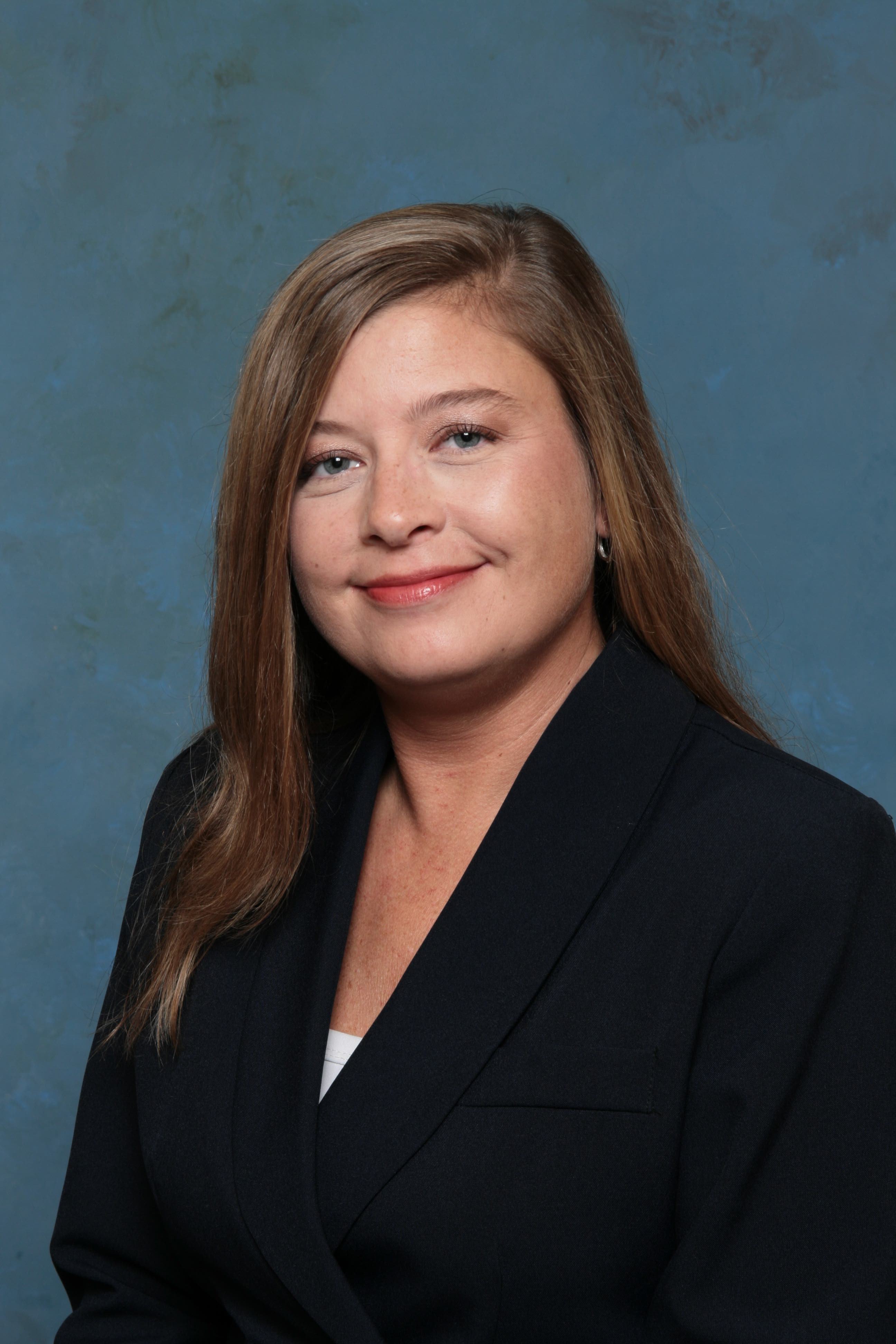
ABOUT WENDY STETINA:
Wendy Stetina is a sales and marketing professional with over 30 years experience in the printing and publishing industry. Wendy works as the Director of Author Services for Outskirts Press. The Author Services Department is composed of knowledgeable customer service reps and publishing consultants; and together, they all focus on educating authors on the self-publishing process in order to help them publish the book of their dreams. Whether you are a professional looking to take your career to the next level with platform-driven non-fiction, or a novelist seeking fame, fortune, and/or personal fulfillment, Wendy Stetina can put you on the right path.

Avoid Using “Hard Returns” in your Manuscript

A few weeks ago, we told you to why you shouldn’t allow your publisher to format your book. As a matter of fact, we gave you 3 good reasons for this. However, neither of those reasons were relevant for you, so you decided to forgo formatting the book yourself.

Formatting a book is not a task to be taken lightly. If your book is poorly formatted, it can mean that you aren’t taken seriously. That’s why most self-publishing companies include interior formatting services in their fee. It is understood and accepted that authors usually don’t have time to learn the nuances of interior layout. When you allow your publisher to format your manuscript, there is one piece of advice you should keep in mind:

Don’t use hard returns.

A hard return occurs when you use the “Enter” key to break the line instead of letting it wrap naturally. Most word processing programs automatically take text that won’t fit on the current line to the next line.  Because your publisher will most likely be copying/pasting the text of your manuscript into their book design program, those hard returns can often throw off the formatting considerably. Because of this, publishers normally don’t accept manuscripts with hard returns. The only exception here is poetry books and using the “enter” key to go to the next paragraph.

Other than hard returns, can you think of any other things you had to change in order for your publisher to accept your manuscript?

Cheri Breeding ABOUT CHERI BREEDING:
Since 2005 Cheri Breeding has been working as the Director of Production for Outskirts Press. In that time, she has been an instrumental component of every aspect of the Production Department, performing the roles of an Author Representative, Book Designer, Customer Service Representative, Title Production Supervisor, Production Manager and, Director of Production. She brings all that experience and knowledge, along with an unparalleled customer-service focus, to help self-publishing authors reach high-quality book publication more efficiently, professionally, and affordably.

The 5Ws of Trade Discounts

To get the best understanding of your book’s price, you have to first understand that there are many individual entities that make up the pricing equation. One of those entities is the trade discount. That term can confuse authors at time, though the concept is not as difficult as it may initially seem. To give you a snapshot view of what trade discounting is, I’ve prepared a list of the 5Ws (Who, What, When, Where, Why) of Trade Discounts:

  • Who sets the trade discount? Sometimes the publisher sets the trade discount. At Outskirts Press, we allow authors to set their own discount.
  • What is the trade discount? The trade discount is the discount you extend to a retailer that is carrying your book. The discount you offer can range from 0% (no distribution) to 100% (highly unlikely).
  • When do I select my trade discount, and can I change it later? You select your trade discount before your book publishes, and while you can change your discount at any time, we don’t recommend it. Some retailers may not recognize the change for a while, and most likely you will incur additional costs for revising your book. It’s important to research trade discounts beforehand in order to make sure you are making the best decision for you and your book.
  • Where will your book be available when choosing certain trade discounts? The minimum trade discount is 20% for online-only distribution. If you want to penetrate most retail stores, you will want to offer a discount of 40-55% (your book must also be fully-returnable). If you’re targeting wholesale clubs (Sam’s Club, Costco, etc.), you will want to offer a discount between 60-75%.
  • Why do I have to offer a discount at all? Your discount determines the price retailers pay for your book (wholesale price). They then sell the book for more (in most cases) and keep the profit. If the retailer can’t make any profit, what’s the benefit of carrying your book? Keep in mind, though, the higher the trade discount, the lower your royalties. In order to make the transaction go smoothly for both parties, you must choose a happy medium from both perspectives (the retailer and you).

What trade discount have you set for your book? Has it allowed you to penetrate your target market?

Cheri Breeding ABOUT CHERI BREEDING:
Since 2005 Cheri Breeding has been working as the Director of Production for Outskirts Press. In that time, she has been an instrumental component of every aspect of the Production Department, performing the roles of an Author Representative, Book Designer, Customer Service Representative, Title Production Supervisor, Production Manager and, Director of Production. She brings all that experience and knowledge, along with an unparalleled customer-service focus, to help self-publishing authors reach high-quality book publication more efficiently, professionally, and affordably.

Top 5 Tips for Reducing Your Carbon Footprint (Including Print on Demand Self-Publishing)

Before you published your book (or while you’re in the process of doing so), did/have you ever considered the negative impact that the printing of your book could have on the environment? Have you ever thought of how many trees die for the sake of unsold books that clutter your house or valuable shelf space in your local bookstore? As an author in times with so many technological advances, print-on-demand self-publishing is quite possibly the route you’ve taken/will be taking. Because of this, you don’t have to worry so much with the negative affects that your book can have on the environment.

With Earth Day right around the corner (April 22), now is the time to re-evaluate your regular activities to determine where you can cut back to reduce your carbon footprint. Here are a few tips to get you started:

1. Publish your book to be printed/distributed using Print-on-Demand technology.

2. Recycle paper, plastic, and aluminum. You can find your local recycling center HERE.

3. Support companies that have “Gone Green”. Usually they will use more energy efficient lighting, print less documents (i.e. paperless systems), and have recycling bins on campus.

4. Use public transportation or walk. Instead of damaging the environment with gases from your vehicle, walk to your destination (when possible) and/or catch the bus/subway.

5. Sign up for e-billing/paperless statements through your bank or credit union. You can call your local branch to see if this is offered.

6. Visit the Environmental Protection Agency (EPA) website to learn more about reducing your carbon footprint.

What things are you doing to be more environmentally-conscious (not just on Earth Day — but everyday)? 

ABOUT WENDY STETINA:
Wendy Stetina is a sales and marketing professional with over 30 years experience in the printing and publishing industry. Wendy works as the Director of Author Services for Outskirts Press. The Author Services Department is composed of knowledgeable customer service reps and publishing consultants; and together, they all focus on educating authors on the self-publishing process in order to help them publish the book of their dreams. Whether you are a professional looking to take your career to the next level with platform-driven non-fiction, or a novelist seeking fame, fortune, and/or personal fulfillment, Wendy Stetina can put you on the right path.

Should You Pay for a Book Review?

As an author in the self-publishing industry, reviews for your book are very important.  A book published by an unknown author has little chance of gaining attention, while the same book (and the same “unknown” author) with a number of positive reviews can begin to gain momentum.  Those positive reviews can help persuade potential new readers to buy the book and the word-of-mouth continues.

You may have already received reviews from some of your friends or colleagues, so what next?  There are some free review services where you can send a copy of your book.  These services are a great resource; however, because they are free, the reviewers get inundated with books and can’t review every book they receive.  Their services can also take several months and the reviews are not guaranteed to be good.

In addition to free review services, there are some services available where you can pay to be guaranteed a review.  That said, the review is still not guaranteed to be good, but if you are confident in your book (which you should be, after all you wrote and published it!), you shouldn’t need to worry about that.

Here are three pay-for-review services you can start with:

BLUE INK REVIEW

Standard Review is $395 for the review to be completed in 7-9 weeks.

Fast Track Review is $495 for the review to be completed in 4-5 weeks.

BlueInk considers for review any book that has been published (self-published and indie published).  They review e-books, on-demand books, printed books in any format, English translations and English-language submissions from outside the United States, as well as galleys. They do not review manuscripts pre-publication.

FOREWORD CLARION REVIEW

The cost is $305 and turnaround time is 6-8 weeks.

Open to all books and publishers, Clarion promises an objective 400 – 500 word review/critique with a quick six to eight week turnaround. The review will be posted on the ForeWord website (if the publisher desires), licensed to the three top wholesale databases, and made available to the book’s publisher. This service is ideal for books that haven’t received review attention elsewhere.

KIRKUS INDIE REVIEW

Standard review is completed in 7-9 weeks for $425.

Express review is completed in 3-4 weeks for $575.

The Kirkus Indie program gives independent authors a chance to obtain an unbiased, professional review of their work, written in the same format as a traditional Kirkus review. A book review can be an essential and powerful tool for promoting your book to literary agents, traditional publishing houses, booksellers, and, most importantly, potential readers.

DISCUSSION: What are your thoughts on pay-for-review services like these?  Do you have experience with any of the above?

ABOUT KELLY SCHUKNECHT:
Kelly Schuknecht works as the Director of Author Support for Outskirts Press.  In addition to her contributions to the Outskirts Press blog at blog.outskirtspress.com, Kelly and a group of talented marketing experts offer book marketing services, support, and products to not only published Outskirts Press authors, but to all authors and professionals who are interested in marketing their books and/or careers. Learn more about Kelly on her blog at http://kellyschuknecht.com.