Weekly Self-Published Book Review: A Patient’s Guide to Liposuction: How to Make an Informed Decision

Book reviews are a great way for self-publishing authors to gain exposure. After all, how can someone buy your book if he or she doesn’t know it exists? Paired with other elements of your book promotion strategy, requesting reviews is a great way to get people talking about what you’ve written.

When we read good reviews, we definitely like to share them. It gives the author a few (permanent) moments of fame and allows us to let the community know about a great book. Here’s this week’s book review by Midwest Book Review:

A Patient’s Guide to Liposuction: How to Make an Informed Decision

Jeffry B. Schafer, MD, FRSM

Publisher: Outskirts Press

ISBN: 9781432777166

Reviewer: Vicki Liston

Reconstructive and cosmetic surgeon Jeffry B. Schafer hopes to inform his readers of the myriad considerations when contemplating having a liposuction procedure. In his new book “A Patient’s Guide to Liposuction: How to Make an Informed Decision,” he introduces the history behind the liposuction concept as well as the advances in the field over the last few decades. His aim is to give prospective patients plenty of information so they can feel more confident about the choices they make and the realities of what to expect during the planning stages, surgery, and recovery.

The book begins with ample history – from the first procedures through the updates to technique and equipment. He covers the science of fat cells, how to choose a doctor, deciding which procedure is right for your personal situation, what can be expected (as well as not expected) when undergoing “lipo,” recovery times, and cost estimates. Color photos of machines, tissue diagrams, and before and after shots all greatly assist in better understanding Schafer’s explanations.

All in all, the information given would be enlightening for someone who knows nothing about liposuction.


Weekly Self-Published Book Review: The Mind of the Historian: Causation in Philosophy of History

Book reviews are a great way for self-publishing authors to gain exposure. After all, how can someone buy your book if he or she doesn’t know it exists? Paired with other elements of your book promotion strategy, requesting reviews is a great way to get people talking about what you’ve written.

When we read good reviews, we definitely like to share them. It gives the author a few (permanent) moments of fame and allows us to let the community know about a great book. Here’s this week’s book review by Midwest Book Review:

The Mind of the Historian: Causation in Philosophy of History

Ali Parsa

Publisher: Outskirts Press

ISBN: 9781432769222

Reviewer: Andrey Bilko

The compelling title “The Mind of the Historian”grabbed my interest right away. Writing history is a fascinating and extremely tough job, requiring the author to juggle the often blurry facts with appropriate analysis and creative commentary while refraining from inventing history as much as possible. Nevertheless, there are a multitude of influences,  like the atmosphere of the time and place when the story is retold or written, affecting the writing of history. It is crucial to understand the author and where he is coming from in order to correctly judge his work. Besides these points, the main goal of Dr. Parsa’s book is looking into the causes behind historical events. Finding the causality between events is the prime role of a historian. The interrelationships between events and people have to be presented and united in a way, which explains their progression from the start to the finish.

The question of causation is a philosophical one. What is causation in the first place? What is the most applicable definition? Philosophers, scientists, and historians have been pondering and offering their opinions on the subject for thousands of years. People like Aristotle, Isaac Newton, and David Hume, just to name a few, all presented certain theories. The truth lies somewhere amidst the clash between the scientific method, social science, and philosophy.

Besides introducing the reader to causation in the Western philosophy, the main focus of the book is causation in Islamic history, which is supported by the case study of the work “Zayn al-Akhbar” by 11th century Persian historian Gardizi. In addition, there is another chapter devoted to analysis of twelve other historians writings between the 9th and 13th centuries in the Islamic world. Dr. Parsa aims to dig deep into these historians’ minds, who represent a broad spectrum of the overall historian community.

“The Mind of the Historian” is based on a dissertation, which gives it some dryness in certain parts. However, considering the subject matter, it reads fairly smoothly. It is a must have for those interested in Perso-Islamic historiography and a curious read for someone wishing to learn more about historical writing.

Weekly Self-Published Book Review: The Art of the Roman Catacombs

Book reviews are a great way for self-publishing authors to gain exposure. After all, how can someone buy your book if he or she doesn’t know it exists? Paired with other elements of your book promotion strategy, requesting reviews is a great way to get people talking about what you’ve written.

When we read good reviews, we definitely like to share them. It gives the author a few (permanent) moments of fame and allows us to let the community know about a great book. Here’s this week’s book review by Midwest Book Review:

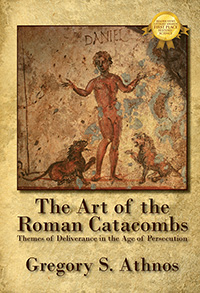
The Art of the Roman Catacombs: Themes of Deliverance in the Age of Persecution

Gregory S. Athnos

Publisher: Outskirts Press

ISBN: 9781432774493

Reviewer: Vicki Liston


One would think that by reading a book about the art that adorns the Roman catacombs, one would purely concentrate on analyzing the style and technique of the ancient artists. However, author Gregory S. Athnos presents his thoughts on the subject from a unique and fascinating angle. “The Art of the Roman Catacombs: Themes of Deliverance in the Age of Persecution” is not your typical Sunday school lecture.

“The Art of the Roman Catacombs” is an amazing journey into the subterranean world of early Christian tomb frescos. While Athnos does make distinction between the rudimentary plaster scratchings and the sarcophagi carvings, he focuses mostly on the main themes of the artwork and how they differ from our current day Christian emphasis. Specifically, we tend to center our minds on the sacrifice – the crucifixion of Jesus Christ – when practicing Christianity. Athnos shows, through example after surprising example, that early Christians didn’t include crosses or any references to sacrifice or death in their art. Instead, they emphasize the resurrection and the newfound power over death. The messages they left were of hope, of deliverance, and of eternal life.

I found the first appendix at the end of the book to be especially interesting. Athnos uses recorded astrological events, historical data, and seasonal information to pinpoint Jesus’ birthday … and it’s not what you think. I grew up believing what he explains although I only had the “shepherds couldn’t have been out in the fields at night in December” reasoning. Athnos not only presents this appendix with ample information to back up his theory but can even utilize the catacomb art to further justify it. I was simply blown away.

Athnos writes with an authoritative tone, speaking with intelligence and eloquence. His style is straightforward and organized, which gives the book a sense of direction and flow. He also succeeds in imparting his enthusiasm on the subject to his readers. Overall, I found his novel way of interpreting the tomb art to be absolutely captivating. I think this would be a fantastic book for not only Bible historians but for small group Bible studies. Further, tourists looking to explore the catacombs would enjoy reading the book before visiting; I know I would have loved to have this before my travels there. It truly gives a fresh perspective on traditional Christianity.

“The Art of the Roman Catacombs” represents a thirst for greater knowledge, empathy for those early Christians living during the Age of Persecution, and a hope that those reading will have a better understanding of what the emphasis was in the religion’s beginnings.

Weekly Self-Published Book Review: Imlich’s Tale: A Woeful Buffeting at the Hands of Fate, or Accident, or Error

Book reviews are a great way for self-publishing authors to gain exposure. After all, how can someone buy your book if he or she doesn’t know it exists? Paired with other elements of your book promotion strategy, requesting reviews is a great way to get people talking about what you’ve written.

When we read good reviews, we definitely like to share them. It gives the author a few (permanent) moments of fame and allows us to let the community know about a great book. Here’s this week’s book review by Midwest Book Review:

Imlich’s Tale: A Woeful Buffeting at the Hands of Fate, or Accident, or Error

Elizabeth Carroll

Publisher: Outskirts Press

ISBN: 9781432775391

Reviewer: Beverly Pechin

First and foremost if you’re not one to appreciate a good folklore or tale of tall tales, magic, and dragons, you won’t enjoy this book. This book is for those who still have a bit of child in their heart and love the ideas of mythical creatures and the magic of those creatures.

This is a story of Imlich, one of a “baker’s dozen” whom his mother has hatched in her nest. She quickly takes a special liking to Imlich, much like you will as you read along with his story. Imlich was among those thought to have the ability to be an heir among the dragons, and it seemed to be in the cards for the future as all could see and feel. While he had no clue what that meant, neither he nor his siblings really cared. They just knew that they were hungry often and were certain that they should fly, as all dragons do. Imlich seemed to be the first to comprehend, at least the beginning steps to obtaining flight, and he quickly helped those siblings that were interested to join him as he taught them the moves he found that brought them each closer to flight, showing he was a leader from the beginning.

His father, the King, seemed to be very much in love with his mother; unlike so many others who had been brought to the King to serve him in bearing him children. Most made it as the companion to the King for less than two years, some not even close to that time, yet his mother was quickly approaching the two-year mark and the comment was made to her by the King himself that it seem there may be an heir to his throne in their batch of little ones. The love seemed endless and true between the King and Imlich’s mother, and the future seemed to be already written.

Had Imlich known the ways of the King, he would have understood that the King had taken to his mother and brought her as close as she would ever come to becoming his Queen. She had been so in love with him, and he seemingly with her. His custom was to  woo those he loved for a matter of two years and then send them off, never marrying them. But this time it was different. This time the future was in the stars and in the eyes of the two who loved each other so very much.

Imlich’s mother had been with her love for almost two years now when they called for a “Seer” to determine who the next in line would be to the throne. The Seer was called upon to give his great insight as to who the next in line to the throne would be. It seemed that both Imlich’s mother and the King himself were both certain that it was one of their own offspring, but in particular she felt certain it would be Imlich. However the Seer instead damned her and turned her and her offspring away immediately in front of everyone. From that evening on, she never again was acknowledged by the King and was thrown to live the life that she had never thought she would live, held captive in the castle area of the King to live with her guardian.

Each part of the story goes on to show you the life of both Imlich and his beloved mother as they move on through time. They face adventures and meet people much like those we have all met in life. The story telling ability of the author makes each adventure as magical as it is, and the story of a dragon and his mother growing up in a world that can often be strange and unpredictable will warm your heart.

Perhaps you may even see yourself in many of the situations and enjoy the comfort of the magical creatures that you grow to love being an inspiration in the real world and what happens in it. It’s truly an amazing, magical book, filled with tender stories, frightening fears and somehow realities that are made magical. The real world intertwines with the magical one, showing you how sometimes we are caught in our own dreams only to be left alone against the world. Touching and amazingly well written, Elizabeth Carroll has a way of truly creating a world of fantasy that encompasses you the entire time you’re reading it.

If you’re one who loves to enjoy the magical wonder of the world of medieval dragons and the wonder of being lost in the magical world of a book, then you will love “Imlich’s Tale.” It allows you to cheer on the “good guys” and hope for the “little guys” in both the magical world of dragons and in the real world of humans. It’s definitely a wonderful way to escape into another world of magic. Keep it handy for any time you simply need to escape into a book of fantasy and a touching story of a dragon and his mother.


Weekly Self-Published Book Review: Merlin’s Message: The Journey Home

Book reviews are a great way for self-publishing authors to gain exposure. After all, how can someone buy your book if he or she doesn’t know it exists? Paired with other elements of your book promotion strategy, requesting reviews is a great way to get people talking about what you’ve written.

When we read good reviews, we definitely like to share them. It gives the author a few (permanent) moments of fame and allows us to let the community know about a great book. Here’s this week’s book review by Midwest Book Review:

Merlin’s Message: The Journey Home

Denise Moon

Publisher: Outskirts Press

ISBN: 9781432773496

Reviewer: Marty Shaw

I love Greek mythology and stories about Merlin the Magician, so I should have loved a book that brought those two elements together. However, “Merlin’s Message: The Journey Home” seemed to suffer from having more pages than useful content to fill those pages.

The premise is excellent. A young boy named Michael sets off on a journey to the New World with his mother and step-father. It should be a fun adventure for Michael except for the facts that his mother appears to be suffering from a strange illness and his step-father seems to have something to do with it. On the journey, Michael learns a lot about Zeus, Poseidon, and other gods and goddesses from a mysterious and friendly sailor named Muldoon. Unfortunately, for the reader, this ocean-going trip lasts a lot longer than it needs to. There’s a lot of pages where the ship goes nowhere because of the lack of wind and we’re treated to many moments of Michael questioning if his reality is real or imagined, expressing how much he enjoys Muldoon’s stories, and thinking about how much he despises his step-father. There are a few interesting parts tucked within these scenes, but there’s only so much action you can squeeze from a ship sitting still on the water.

Eventually, a storm allows the story to progress past this stalled moment and Michael’s adventure truly begins as he explores a wondrous island filled with faeries, nymphs, talking trees and stones, and paths that seem to appear and disappear on their own. Again, it seems like space had to be wasted just to fill a certain number of pages because Michael suddenly becomes what has to be the densest main character that has ever existed. One moment, he’s discovering that he wields incredible powers, but then he gets scared when the sun goes down. He’s told time and time again that evil or fearful thoughts will summon creatures from his nightmares that will make his journey more difficult, so he immediately begins to imagine various assortments of creatures in the forest that want to kill him. I can understand these moments happening early on, but once that point of change occurs, it just seems awkward to take the main character back a few steps. Even after Michael sees for himself that he truly holds awesome power and is in control of what he faces while on the island, he still cowers and whimpers way too much.

I was prepared to thoroughly enjoy “Merlin’s Message: The Journey Home,” but there was too much book for the actual story that was contained within.